
The Legendary Dr. Vasant Lad and Wellbeing Coach Ebru Şinik: An Ayurveda Interview – Vol. 2
In the second part of this rare and insightful interview, Dr. Vasant Lad discusses his teaching programmes in the United States and India and explains the traditional educational path followed by Ayurvedic physicians.
He also shares the Ayurvedic perspective on serious illness and reflects on pranayama as a bridge between the body, mind and consciousness.
This second volume continues our conversation on education, clinical experience, traditional Ayurveda and the transformative place of breath within Vedic knowledge.
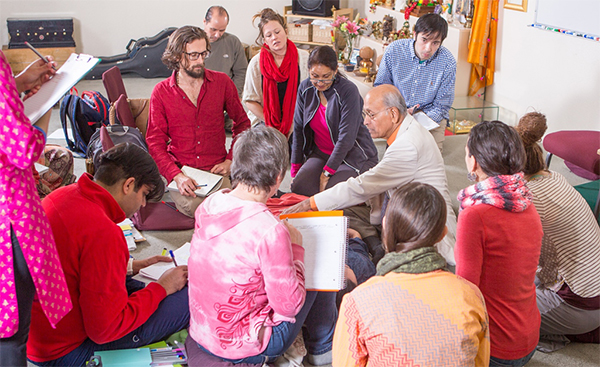
How Do You Divide Your Time Between the United States and India?
“I am in the United States from January until the middle of July. Then I travel to New York and Germany, and afterwards I return to India.”
Dr. Vasant Lad
I generally spend the autumn season in India, with a short period of travel to Europe in October.
On average, I spend approximately seven months of the year in the United States and the remaining five months in India.
We organise several educational programmes in India throughout the year.
These include a Panchakarma therapist programme, two six-week programmes in August and September, and an advanced Gurukula programme held for six weeks in November and December.
Clinical and Traditional Training in India
Panchakarma Therapist Programme
Students learn the traditional theory, preparation and practical application of important Panchakarma procedures within the institute’s educational system.
Advanced Gurukula Programme
The advanced Gurukula programme is designed for students who have completed the first two levels of Ayurvedic study and wish to gain further exposure to traditional clinical observation and practice.
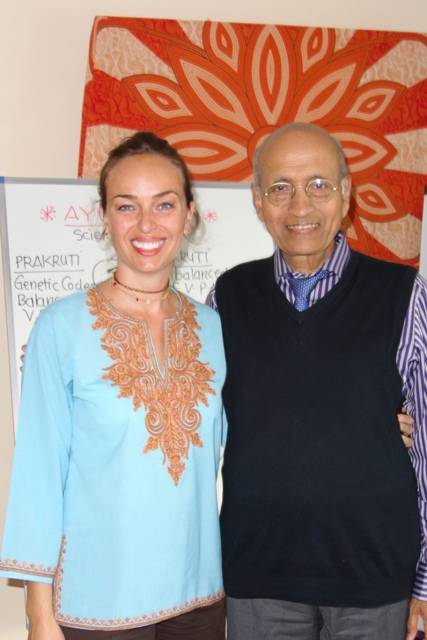
How Long Does It Take to Become a Fully Qualified Ayurvedic Doctor?
“In India, the principal professional Ayurvedic degree is BAMS: Bachelor of Ayurvedic Medicine and Surgery.”
Dr. Vasant Lad
Dr. Lad explained that the BAMS educational pathway traditionally consists of approximately four and a half years of academic education followed by a one-year clinical internship.
This results in a total undergraduate training period of approximately five and a half years.
Students seeking advanced postgraduate qualifications may continue with further study after completing the undergraduate degree and internship.
In the educational pathway described during the interview, an additional postgraduate period of approximately three years was required for advanced specialisation.
During this process, students study under supervision and prepare a thesis on a clinical subject.
Examples may include the traditional study of plants such as shatavari, pippali or neem in relation to particular conditions.
Students are then evaluated through theory, practical and clinical examinations before completing the relevant professional qualification.
Educational titles, regulations and professional authority may vary by country and may change over time. A qualification recognised in India does not automatically provide medical licensing in another country.
Educational Context
The programme structure described above reflects Dr. Lad’s explanation at the time of the interview. Current course duration, postgraduate pathways and licensing requirements should always be verified through the relevant educational and regulatory authorities.
How Does Traditional Ayurveda View Cancer?
In the interview, Ebru Şinik asked Dr. Lad how Ayurveda traditionally interprets serious illnesses such as cancer and whether Ayurveda can contribute to the treatment process.
“Within the traditional Ayurvedic framework, cancer is interpreted as a tri-doshic disorder involving vata, pitta and kapha.”
Dr. Vasant Lad
Dr. Lad’s Explanation
Dr. Lad described cancer through the traditional language of the three doshas and also acknowledged that genetic predisposition may play an important role.
He emphasised the importance of early diagnosis and explained that, within his approach, serious illness requires teamwork rather than reliance on a single therapy or practitioner.
He also referred to traditional Ayurvedic compounds and Panchakarma practices that may be considered within Ayurvedic clinical traditions.
Dr. Lad noted that treatment becomes considerably more complex once cancer has spread to distant parts of the body.
Ayurveda Does Not Replace Oncology
The dosha-based explanation above represents a traditional Ayurvedic interpretation. It is not a modern medical explanation of cancer.
Ayurveda, Panchakarma, herbal preparations and rasa shastra compounds have not been shown to prevent or cure cancer.
Some traditional preparations may contain potentially toxic metals or may interact with chemotherapy, radiotherapy, immunotherapy, targeted therapies or other medicines.
Cancer screening, diagnosis and treatment must be managed by appropriately qualified oncology professionals.
Any complementary practice should be discussed with the oncology team before use and should never delay or replace evidence-based treatment.
Why Can Breathing Practices Create Such a Profound Sense of Balance?
Ebru Şinik attended Dr. Lad’s class in Istanbul on breathing techniques and asked him why these practices can create such an immediate and powerful experience in the body and mind.
“These breathing techniques are called pranayama.”
Dr. Vasant Lad
Alternate Nostril Breathing in the Traditional Ayurvedic Framework
Dr. Lad explained Anuloma Viloma as a practice that alternates breathing through the right and left nostrils.
Within traditional yogic and Ayurvedic philosophy, the right side is associated with pingala nadi, while the left side is associated with ida nadi.
The practice is traditionally described as helping create balance between these two energetic pathways and between the qualities represented by vata, pitta and kapha.
These concepts belong to the traditional philosophical model of yoga and Ayurveda and should not be confused with anatomical nerves or clinically measurable disease processes.
Breath as a Bridge
Dr. Lad described breath as a bridge between the body, mind and consciousness.
He shared a contemplative practice beginning with quiet sitting and conscious breathing.
During this traditional practice, the individual observes the breath, physical sensations, emotions and spontaneous responses of the body without immediately trying to suppress them.
Dr. Lad explained that grief, sadness or memories may sometimes arise during an inwardly focused breathing practice.
He described the next stage as witnessing: observing the movements of the body and mind with increasing awareness and less identification.
In his spiritual interpretation, this process can help the practitioner experience an inner sense of clarity, spaciousness and light.
“Breath is the bridge between body, mind and consciousness.”
Dr. Vasant Lad
Breathing Practices Are Supportive, Not Universal Cures
The statement that breath can “cure any disease” reflects a spiritual and traditional interpretation. It should not be understood as a medical claim.
Appropriate breathing practices may support relaxation, attention, stress regulation and body awareness.
However, they do not diagnose, prevent or cure cancer, cardiovascular disease, neurological disorders, infection or another medical condition.
Intense or prolonged breathing can sometimes cause dizziness, tingling, hyperventilation, panic or emotional distress.
People with significant cardiovascular, respiratory, neurological or psychological conditions should seek appropriate guidance before beginning an intensive breathwork practice.
A Safer Way to Begin
Sit Comfortably
Sit upright without becoming rigid. Relax the face, jaw, neck and shoulders.
Observe the Natural Breath
Notice the rhythm and movement of the breath without forcing it to become unusually deep.
Remain Within Comfort
Continue for a few minutes and stop if you feel dizzy, breathless, panicked or uncomfortable.
Four Themes That Stand Out
Knowledge Across Cultures
Dr. Lad’s life reflects the movement of traditional Ayurvedic knowledge between India, Europe and the United States.
Long-Term Education
Professional Ayurvedic education in India involves extended academic and clinical study rather than a short certificate course.
Responsible Integration
Traditional wellbeing systems must not replace necessary screening, diagnosis or evidence-based medical treatment.
Breath and Inner Awareness
Pranayama is presented as a traditional means of cultivating awareness and supporting harmony between the body and mind.
Continue to Ayurveda Interview – Vol. 3
Continue reading the final part of Ebru Şinik’s special conversation with Dr. Vasant Lad.
Read Vol. 3Knowledge becomes meaningful when it is approached with curiosity, responsibility and respect for both tradition and scientific evidence.
Be Well, Be Happy!
Dr. Vasant Lad, Ayurveda Education and Pranayama
How did Dr. Vasant Lad divide his time between the United States and India?
At the time of the interview, he described spending approximately seven months in the United States and five months in India, with additional teaching travel in Europe.
What is a Panchakarma therapist programme?
It is a traditional Ayurvedic training programme in which students study the theory and practical application of Panchakarma procedures.
What is BAMS?
BAMS stands for Bachelor of Ayurvedic Medicine and Surgery, a professional Ayurvedic degree awarded in India.
Does an Indian Ayurvedic degree allow someone to practise medicine anywhere?
No. Professional authority and medical licensing depend on the laws and regulatory requirements of each country.
Can Ayurveda cure cancer?
No Ayurvedic or complementary treatment has been shown to cure cancer. Cancer care must be managed by qualified oncology professionals.
Can Ayurvedic herbs be used during cancer treatment?
Only after consultation with the oncology team. Herbal products may interact with cancer treatments, and some traditional preparations may contain harmful substances.
What is Anuloma Viloma?
Anuloma Viloma is a traditional alternate-nostril breathing practice used within yoga and pranayama systems.
Can pranayama cure disease?
No. Appropriate breathing practices may support relaxation, awareness and stress regulation, but they do not replace medical diagnosis or treatment.
Can intensive breathwork cause side effects?
Forceful or prolonged breathing may cause dizziness, tingling, hyperventilation, anxiety or emotional discomfort. The practice should be stopped when these symptoms occur.
Wellbeing Note
This interview presents Dr. Vasant Lad’s personal experiences and traditional Ayurvedic and yogic views.
Ayurveda, Panchakarma, herbal preparations and pranayama do not diagnose, prevent or cure cancer or another serious medical condition. Professional medical care should not be delayed, replaced or discontinued.
Ebru Şinik
Wellbeing Coach & Ayurveda Instructor,
Holistic Health Author