
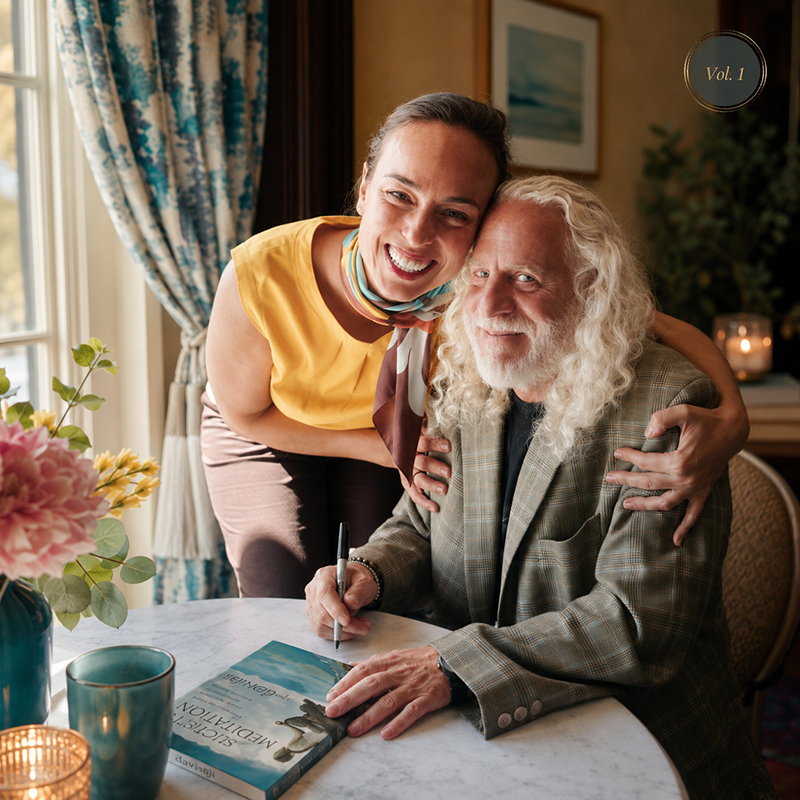
Meditation Is Listening: Davidji on Finding the Answers Within, in Conversation with Ebru Şinik – Vol. 1
So many people search for peace and balance everywhere but the one place where they may begin to discover them: within.
In this special conversation, davidji explains how meditation can become part of real life, why silence allows us to hear more clearly and how a sustainable daily practice begins.
Prayer can be understood as speaking. Meditation begins when we become quiet enough to listen.
Bringing Meditation into Real Life
Meditation is sometimes presented as something mysterious, complicated or available only to people who can withdraw from ordinary life.
In his book Secrets of Meditation, davidji approaches the practice differently. He explains meditation through the realities of work, relationships, stress, change and everyday responsibilities.
His central message is simple: we do not always need to search farther away. Some of the clarity we seek may already be waiting beneath the noise of the mind.
Before We Discuss Your Book, Could You Tell Us How Your Journey as a Meditation Teacher Began?
I spent many years in corporate finance and business in New York City.
For a period of time, I even worked on one of the higher floors of Tower 2 at the World Trade Center, in the area later known throughout the world as Ground Zero.
I had explored different forms of meditation during my university years in upstate New York. But as my professional and personal life became increasingly demanding, I gradually stopped practising.
For approximately fifteen years, I tried to juggle the many different parts of my life while feeling painfully unfulfilled.
I wanted peace of mind. I wanted meaningful work. I wanted to reconnect with the depth of feeling that I had known when I was younger.
My work and personal relationships were strained. I was waking up, rushing through the day, coming home, eating, reading or watching television and then collapsing into sleep.
“What Is Going to Be Written on Your Tombstone?”
The turning point arrived during an unexpected encounter with a homeless man on the street.
He reached out, held the leg of my trousers and asked me:
“What is going to be written on your tombstone?”
davidji
In that face-to-face, soul-to-soul moment, the question took my breath away.
I answered honestly: “I don’t know.”
Soon afterwards, I attended a meditation retreat and immersed myself in meditation, Ayurveda, yoga, Vedanta, emotional healing and traditional teachings on consciousness.
That experience marked the beginning of a profound transformation in the direction of my life.
You Served as One of the University’s Leading Educators. How Long Were You There, and Where Did Your Work Continue?
I served as dean of the university for ten years, translating traditional wisdom into practical interpretations, rituals and techniques for people living in the modern world.
Every day during that period was devoted to reading, studying, teaching and helping students understand how these timeless teachings could be integrated into everyday life.
Over the wider course of approximately twelve years, I taught hundreds of thousands of students in many countries and helped train meditation teachers from around the world.
Yet I felt called to bring these practices to an even broader range of people and environments.
Taking Meditation Beyond Retreat Centres
I wanted to help business professionals become more effective and make clearer decisions.
I wanted to help police officers and people working in high-pressure professions regulate stress.
I wanted to support families in communicating more openly and building healthier relationships.
I also wanted to reach people who could not afford expensive programmes by bringing meditation into schools, hospitals and homeless shelters.
Everyone is seeking greater peace and happiness in one form or another.
I feel deeply grateful whenever I can help someone move closer to the best version of themselves.
Guided Meditation
Audio practices can make meditation more approachable for beginners who need structure and guidance.
Retreats and Workshops
Retreats provide time to step out of habitual routines and explore meditation with greater continuity.
Teacher Education
Training future teachers allows meditation practices to reach different communities through responsible guidance.
Real-World Applications
Meditation can be adapted for workplaces, families, schools and other everyday environments.
How Could Readers Follow Your Events and Programmes at the Time of This Interview?
At the time of our conversation, davidji hosted a regular radio programme and communicated with his community through his website, social-media channels, newsletters and online calendar.
His website listed signature events, meditation retreats, teacher trainings and international speaking programmes.
Because programme schedules and digital platforms change over time, readers should consult davidji’s current official channels for up-to-date event and teaching information.
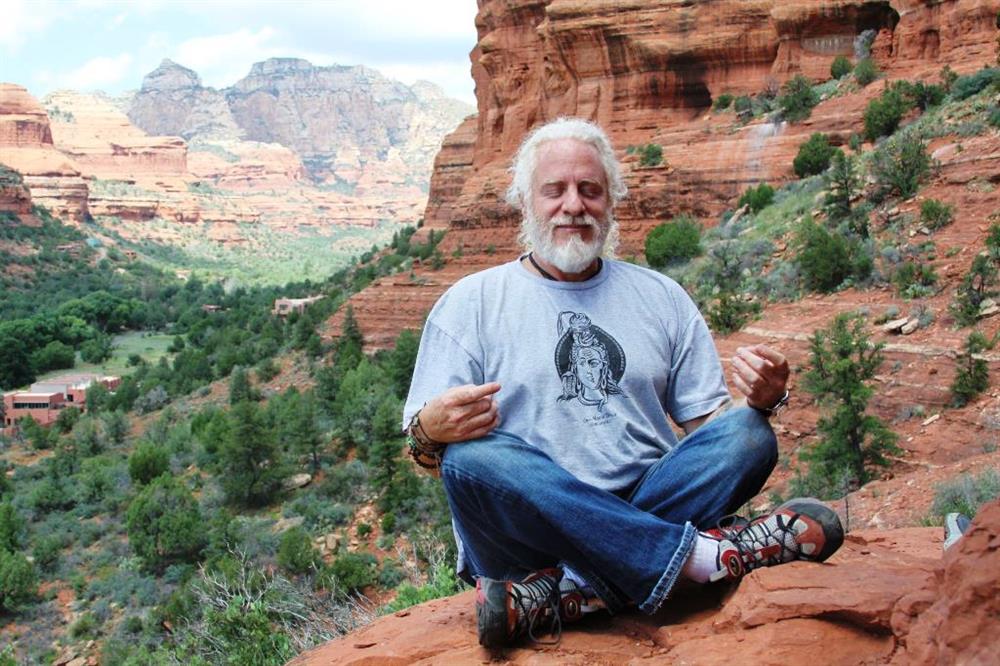
Meditation Is Not an Escape from Life
The purpose of meditation is not to avoid relationships, decisions or responsibilities.
It is to create enough inner space to meet those realities with greater awareness and less automatic reactivity.
Silence becomes useful when the clarity discovered within it is carried back into daily life.
Your Book Secrets of Meditation Reached a Wide Audience. What Is the Great Secret?
“The answers to finding peace and balance are within us.”
davidji
I wrote Secrets of Meditation to demystify meditation and bring it into people’s actual lives.
We spend so much time searching outside ourselves for answers, approval, direction and peace.
Yet when we meditate and become fully present, we may begin to recognise information, feelings and insights that were already there.
Meditation does not necessarily place new answers inside us. It helps us hear what constant mental noise may have been covering.
Life is always unfolding, shifting and transforming. Meditation gives us a way to witness that movement with greater clarity.
“Prayer is talking to God. Meditation is listening to God.”
davidji
How Many Forms of Meditation Exist, and Which Ones Are Most Effective?
There are countless forms of meditation: mantra, breath awareness, mindfulness, guided meditation, visualisation, sound practices, biofeedback and even mindful eating.
Different techniques may create different experiences.
Some help calm the mind in the moment. Others may create a sense of calm afterwards. Some practices are expansive, some are grounding and some help direct attention towards a particular subject.
Rather than declaring one technique universally superior, I encourage people to explore responsible practices and notice which one brings them the greatest clarity, steadiness and peace.
Common Approaches to Meditation
Mantra Meditation
A sound, word or phrase is repeated as a stable point of attention.
Breath Awareness
Attention rests on the natural rhythm and physical sensation of breathing.
Mindfulness
Thoughts, feelings and sensations are observed without immediately judging or reacting to them.
Guided Meditation
A teacher or recording provides verbal guidance through the practice.
How Often and for How Long Do You Recommend Meditating?
One of the greatest challenges is ensuring that the first meditation of the day actually happens.
To make the practice easier to remember, I developed a simple ritual known as RPM:
Rise
Begin immediately after waking, before the day becomes crowded.
Pee
Attend to the body’s natural need before sitting down to practise.
Meditate
Sit before checking messages, news or the demands of the day.
davidji’s longer-term recommendation was to work gradually towards approximately thirty minutes in the morning and another practice later in the day.
Beginners do not need to start with this duration. A shorter practice that can be repeated consistently is more useful than an ambitious routine that quickly becomes unsustainable.
A More Realistic Beginning
Begin with five minutes at approximately the same time each day.
Once the routine feels familiar, increase the duration gradually according to your needs, schedule and response to the practice.
Consistency matters more than forcing yourself to reach a particular number of minutes.
What About Levitation and Other Supernatural Experiences Associated with Advanced Meditation?
davidji described having studied advanced yogic and meditation traditions with several teachers.
Within some spiritual traditions, extraordinary states and abilities are discussed as part of advanced practice.
Yet his answer quickly returned to what is far more useful for ordinary life.
“Sometimes the most enlightened technique is learning to forgive yourself for something you said or did.”
davidji
Personal empowerment, compassion, peace of mind and making better decisions in our relationships are more relevant to most people than pursuing extraordinary experiences.
The purpose of meditation is not to collect impressive spiritual achievements. It is to become more present, more conscious and more skilful in the way we live.
Spiritual Accounts and Scientific Evidence
Claims of physical levitation through meditation have not been established through reliable scientific evidence.
Such descriptions should be understood as personal accounts or elements of particular spiritual traditions rather than medically or scientifically verified outcomes.
The more practical benefits of meditation are found in attention, self-awareness, emotional regulation and the ability to pause before reacting automatically.
Four Ideas That Stand Out
Meditation Is Listening
Silence can help us recognise thoughts and insights that were already present beneath mental noise.
Routine Creates Continuity
Connecting meditation to an existing morning habit can make daily practice easier to sustain.
Different Methods Serve Different Needs
There is no single meditation technique that is automatically best for every person.
Compassion Matters More Than Performance
Forgiveness, awareness and healthier relationships are more valuable than chasing extraordinary experiences.
Continue to the davidji Interview – Vol. 2
Continue reading Ebru Şinik’s special conversation with davidji on meditation, stress, transformation and conscious daily living.
Read Vol. 2The answers we seek may not always arrive through more effort, more information or more searching.
Sometimes they become audible only when we finally become quiet enough to listen.
Be Well, Be Happy!
Meditation, Daily Practice and Inner Silence
What does “meditation is listening” mean?
It describes meditation as a practice of becoming quiet enough to observe thoughts, feelings and inner signals that may be hidden by constant mental activity.
What is the main message of Secrets of Meditation?
The book aims to make meditation understandable and practical for people living ordinary, busy lives.
What does RPM mean?
RPM stands for Rise, Pee, Meditate. It is a memorable morning routine designed to help practitioners meditate before becoming distracted by the day.
Do beginners need to meditate for thirty minutes?
No. Beginners can start with approximately five minutes and increase the duration gradually as the routine becomes familiar.
Which meditation technique is the best?
No single technique is best for everyone. The most suitable practice depends on the person’s needs, experience and response.
Is meditation a religious practice?
Meditation appears within many spiritual traditions, but it can also be practised as a secular attention and awareness exercise.
Can meditation make someone levitate?
Reliable scientific evidence has not established physical levitation as an outcome of meditation.
Can meditation replace psychological treatment?
No. Meditation may support wellbeing, but it does not replace appropriate psychological or medical assessment and treatment.
Wellbeing Note
Meditation may support attention, relaxation, self-awareness and stress regulation, but individual responses can differ.
Some people may experience increased anxiety, difficult memories or emotional discomfort during intensive or prolonged meditation.
Meditation does not diagnose or treat a medical or psychological condition. Seek qualified professional support when symptoms are persistent or significantly affect daily life.
Ebru Şinik
Wellbeing Coach & Ayurveda Instructor,
Holistic Health Author