
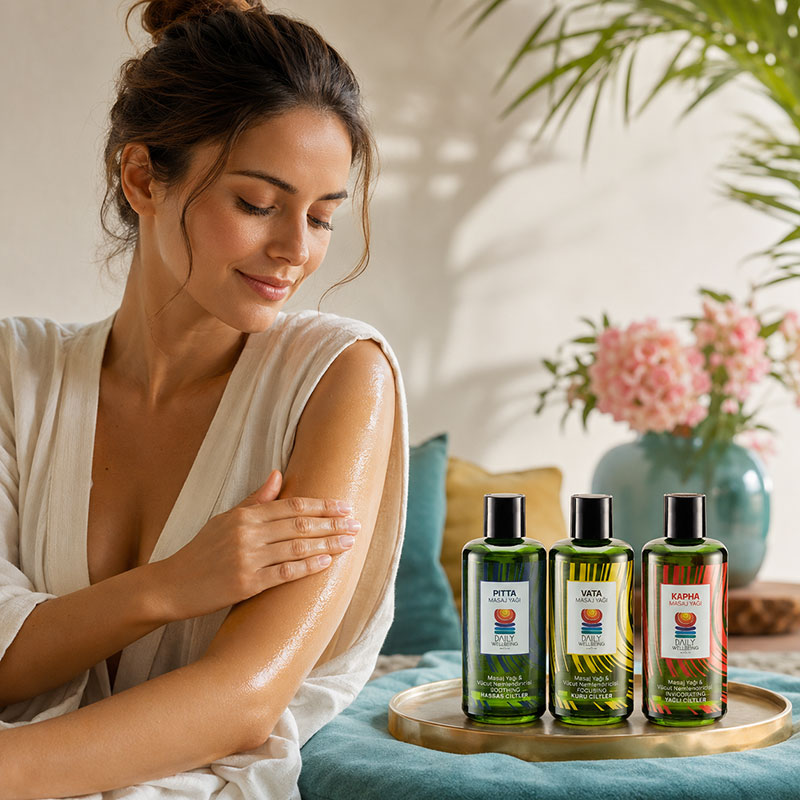
How to Do Self-Abhyanga Massage
Abhyanga is a traditional Ayurvedic oil-massage ritual that can be performed gently on your own body as part of a daily or weekly self-care routine.
The combination of mindful touch, rhythmic movements and a body oil selected according to your skin needs and the season can create a soothing moment of connection between body and mind.
Self-Abhyanga is not about applying strong pressure. It is a slow, attentive and nourishing practice in which comfort always comes first.
What Is Abhyanga?
Abhyanga is the Ayurvedic practice of applying oil to the body with slow and rhythmic massage movements. When the massage is performed by the individual on their own body, it is known as Self-Abhyanga.
In Ayurveda, oil massage is traditionally included in Dinacharya, the daily routine designed to create greater regularity and balance in everyday life.
From a modern wellbeing perspective, the ritual offers time to slow down, moisturise the skin, observe areas of tension and reconnect with the body through conscious touch.
What May Self-Abhyanga Support?
Self-Abhyanga should be understood as a supportive self-care ritual rather than a medical treatment or a method for removing toxins from the body.
Skin Moisturisation
Plant-based body oils can help soften the skin and support its surface moisture barrier when they are suitable for your skin type.
Relaxation
Slow, repetitive massage movements may support relaxation and help create a calmer transition into the day or evening.
Body Awareness
Moving through the body gradually may help you notice muscular tension, dryness, sensitivity and areas requiring greater care.
A Grounding Ritual
Setting aside a few uninterrupted minutes for self-care may support emotional balance and a more grounded daily rhythm.
Muscle Comfort
Gentle massage may help temporarily ease everyday stiffness and encourage comfortable movement without using deep pressure.
Evening Wind-Down
A shorter massage of the feet, hands, shoulders or scalp may be included in a quiet evening routine before sleep.
Select an Oil According to Your Skin and the Season
Ayurveda traditionally selects oils according to individual constitution and seasonal qualities. For practical daily use, begin with the needs of your skin, the climate and your personal response to the aroma and texture.
Vata Body Moisturizer and Massage Oil
Developed especially for dry skin and suitable for use during colder seasons. Its richer texture can be preferred when the skin needs nourishing care.
Discover Vata OilPitta Body Moisturizer and Massage Oil
Formulated for sensitive skin and hot seasons. It can be applied at room temperature when a lighter and more refreshing sensation is preferred.
Discover Pitta OilKapha Body Moisturizer and Massage Oil
A lighter Ayurvedic oil blend that can be selected for oilier skin or for a more stimulating morning massage ritual.
Discover Kapha OilPerform a Patch Test
Natural ingredients and essential oils may still cause irritation or an allergic reaction in sensitive individuals.
Apply a small amount to a limited area of intact skin and observe the area before using a new product over the whole body.
Do not use the oil if it causes burning, itching, persistent redness, swelling or another unexpected reaction.
How Should You Warm the Massage Oil?
Place the closed bottle or the amount you intend to use in a small heat-safe container inside a bowl of comfortably hot water for several minutes.
Do not boil the oil, heat it directly over a flame or apply it while it is excessively hot.
Test a drop on the inside of the wrist. The temperature should feel pleasantly warm and immediately comfortable.
During hot weather, or when using a cooling Pitta oil, room-temperature application may feel more suitable.
Before Starting Your Self-Abhyanga Massage
Set Aside Time
Allow approximately 5 to 15 minutes, depending on your routine and available time.
Protect Surfaces
Place a towel beneath you and keep oil away from floors that may become slippery.
Use Gentle Pressure
The massage should feel soothing and should never produce pain, bruising or numbness.
Stay Present
Slow down the movements and observe how each area of the body responds to touch.
How to Perform Self-Abhyanga Step by Step
You can complete the full sequence or shorten it by focusing on the scalp, shoulders, hands, abdomen or feet according to your available time.
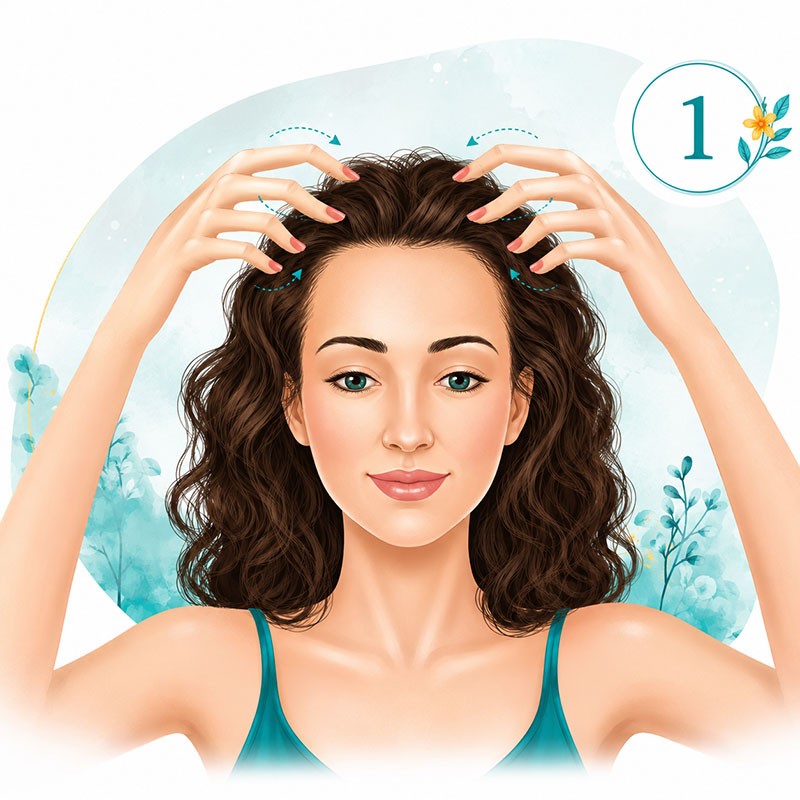
Begin with the Scalp
Pour a small amount of warm oil into your palm and distribute it across the scalp with the fingertips.
Use gentle circular movements as though you were slowly shampooing the hair. Avoid scratching with the nails.
When you do not wish to oil the hair, perform the same movements with clean, dry fingertips.
Pay attention to the temples, the area behind the ears and the base of the skull, keeping the pressure light and comfortable.
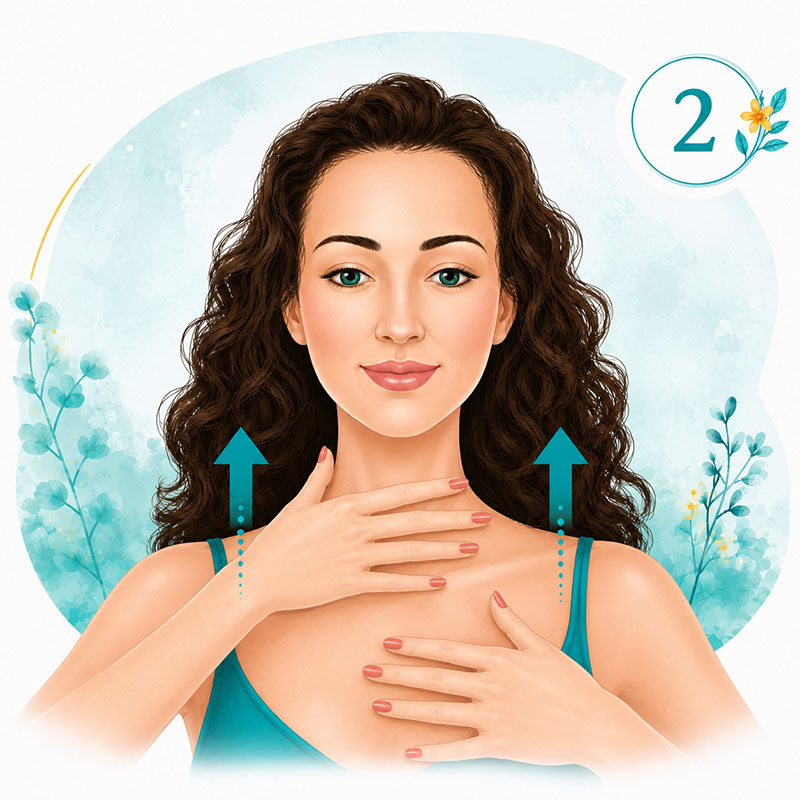
Massage the Neck and Shoulders
Spread a small amount of warm oil across the neck, nape and shoulder area.
Use the flat surfaces of the fingers and palms rather than pressing with the fingertips.
Glide slowly over the sides and back of the neck and across the shoulders, avoiding strong pressure over the front of the throat.
Reach the shoulder blades only as far as your arms move comfortably. Do not twist or strain to reach the centre of the back.
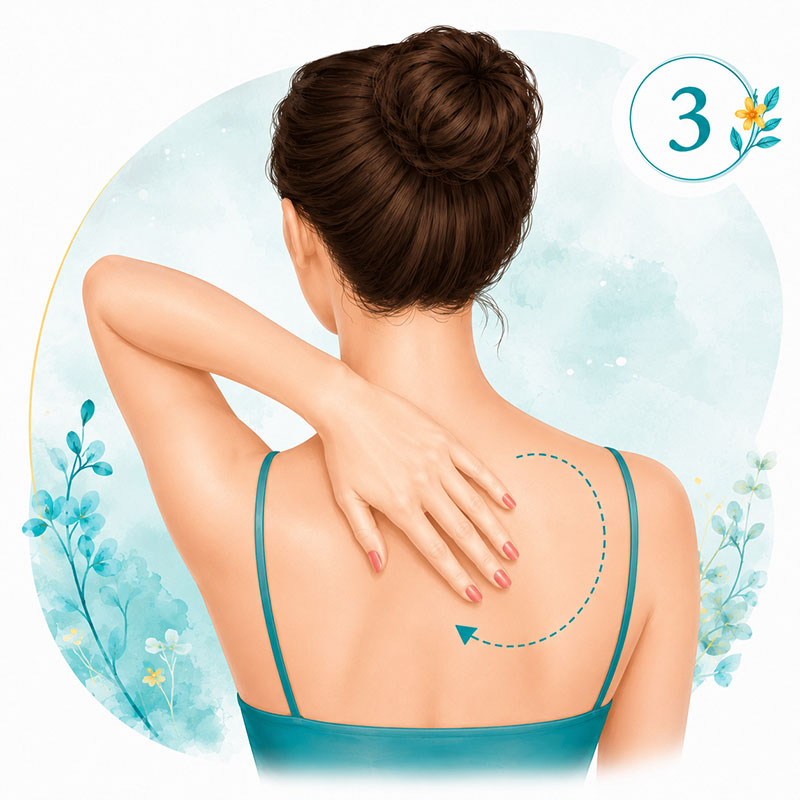
Continue Across the Chest and Upper Back
Apply the oil gently across the upper chest using broad, slow movements.
Massage around the breastbone and collarbones without applying deep pressure over breast tissue, ribs or sensitive areas.
Use the palms to reach the sides of the torso and as much of the upper back as you can access comfortably.
Avoid massaging any lump, painful area, inflamed tissue, recent surgical site or unexplained swelling.
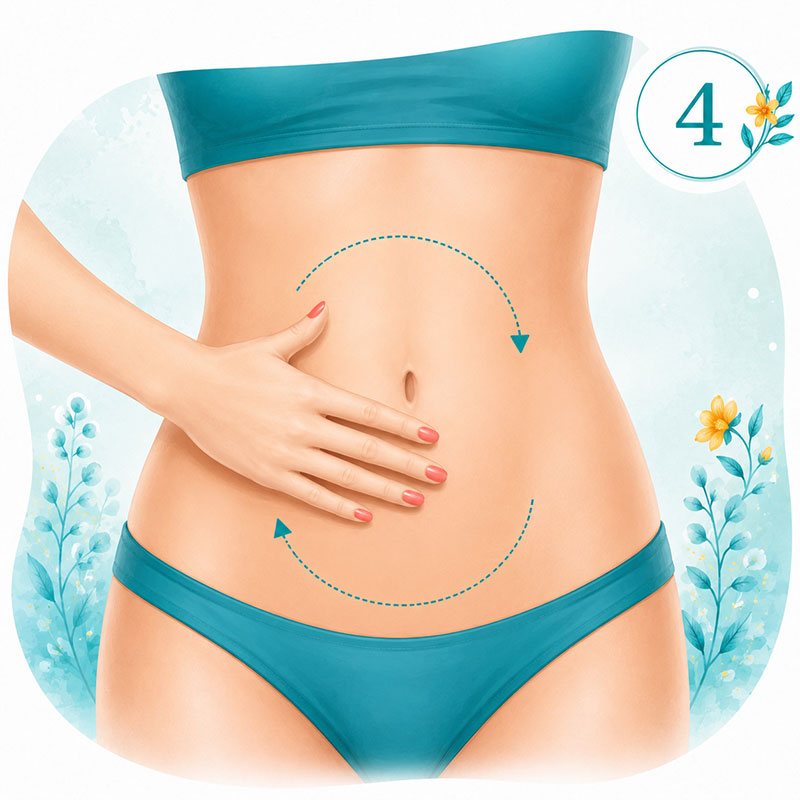
Massage the Abdomen Clockwise
Place both hands gently over the abdomen and allow the abdominal muscles to soften.
Use broad clockwise circles from your own perspective: move upwards along the right side, across the upper abdomen and down along the left side.
Keep the pressure light, particularly after eating or whenever the abdomen feels tender.
Do not massage the abdomen during unexplained pain, acute digestive symptoms, pregnancy without guidance or after recent surgery.
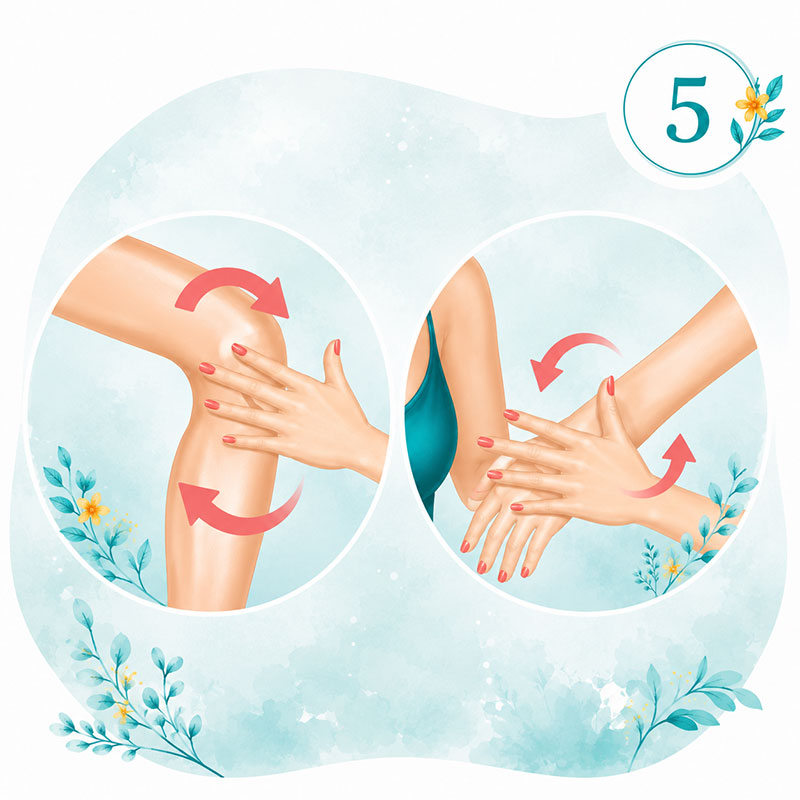
Massage the Arms, Elbows and Hands
Apply longer back-and-forth strokes over the upper arms and forearms.
Use gentle circular movements around the shoulder, elbow and wrist joints.
Massage the palms, the backs of the hands and the spaces between the fingers.
Finish by moving along each finger gently from its base towards the fingertip.
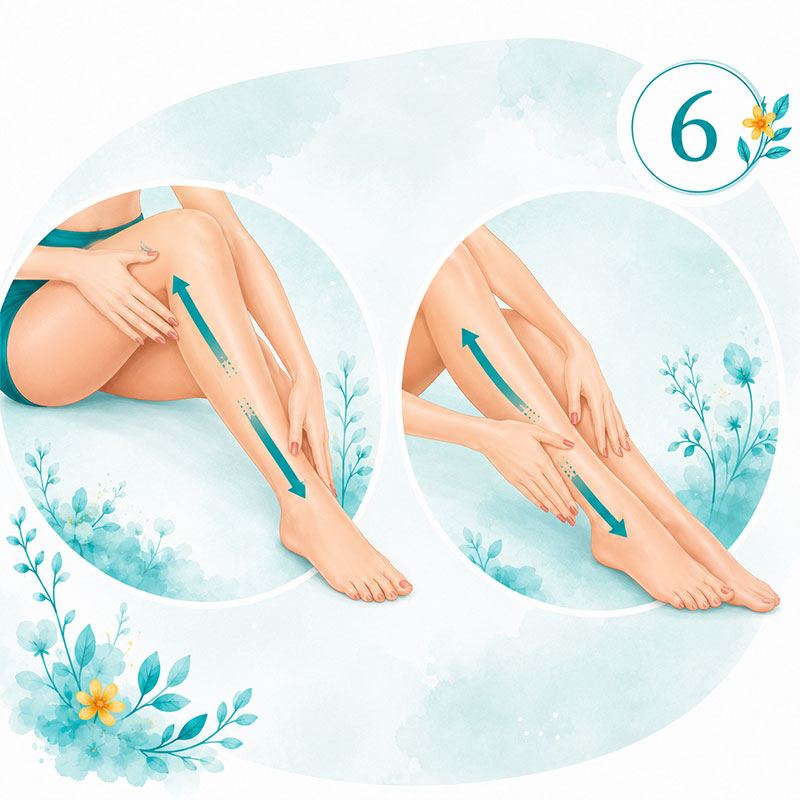
Continue to the Hips and Legs
Use broad circular movements over the hips and buttocks without applying painful pressure.
Massage the thighs and lower legs using long, comfortable strokes in both directions.
Use smaller circles around the knees and ankles, supporting the joint rather than pressing directly into it.
Do not massage a leg that is suddenly swollen, red, hot, painful or suspected of containing a blood clot.
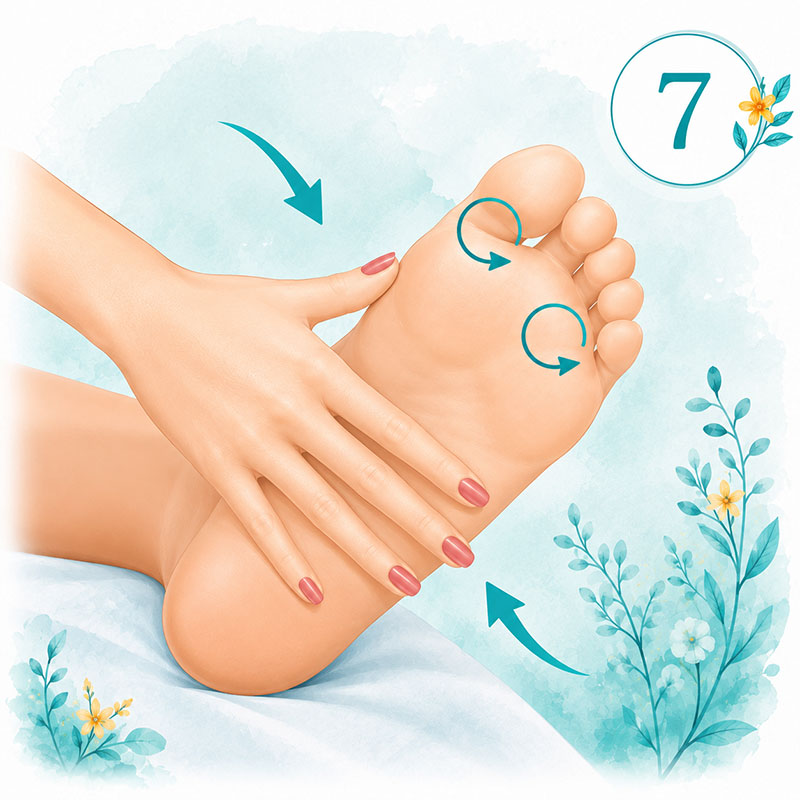
Complete the Massage with the Feet
Sit securely and support one foot at a time in a position that does not strain the hips or lower back.
Massage the sole with the thumbs using slow circular and back-and-forth movements.
Continue around the heel, ankle and top of the foot, then massage each toe individually.
Foot massage may feel deeply relaxing, but it should not be described as a treatment for specific internal organs or medical conditions.
Allow the Oil to Remain on the Skin
When applying Self-Abhyanga before bathing, allow the oil to remain on the skin for approximately 10 to 20 minutes when this feels comfortable.
You may then take a comfortably warm shower and cleanse only as much as necessary, avoiding excessively hot water that may leave the skin feeling dry.
When using the oil as a moisturiser after bathing, apply a smaller amount to slightly damp skin and allow it to absorb before dressing.
Take care around the bathroom and shower floor, as oil residue can make surfaces extremely slippery.
How Often Should You Practise Self-Abhyanga?
You may perform a brief 5-minute massage regularly or reserve a longer 15-minute practice for one or two days each week.
A daily full-body routine is not compulsory. Scalp, shoulder, hand or foot massage can be selected according to your needs and available time.
Regularity is more useful than trying to complete a long ritual that does not fit sustainably into your daily life.
Important Self-Massage Safety Notes
- Do not massage broken, infected, burned or severely irritated skin.
- Avoid direct pressure over unexplained lumps, swelling or severe pain.
- Do not massage an area affected by an acute injury or recent surgery without professional guidance.
- Stop if the oil causes burning, itching, redness or breathing difficulty.
- Seek medical guidance if you use blood thinners or have a bleeding disorder.
- Do not massage a limb with a known or suspected blood clot.
- During pregnancy, avoid deep abdominal pressure and seek qualified guidance.
- People receiving cancer treatment or managing a serious medical condition should ask their healthcare team which massage practices are appropriate.
Choose a Product Designed for Topical Use
A product described as natural is not automatically suitable for every person or every skin type.
Read the complete ingredient list, follow the product directions and choose blends produced specifically for safe use on the skin.
Skin absorption varies according to the ingredient, formulation, concentration and condition of the skin. It is therefore not accurate to assume that everything applied to the skin passes directly into the bloodstream.
Daily Wellbeing Ayurvedic Body Moisturizers and Massage Oils
Discover the Vata, Pitta and Kapha body-oil blends developed for different skin needs, seasons and self-care rituals.
Discover the Ayurvedic Body OilsA few minutes of conscious touch can transform ordinary skin care into a meaningful moment of slowing down and reconnecting with the body.
Be Well, Be Happy!
Self-Abhyanga Massage
What is Self-Abhyanga?
Self-Abhyanga is a traditional Ayurvedic practice in which an individual applies oil to their own body using gentle and rhythmic massage movements.
Should Abhyanga be performed before or after a shower?
It can be performed before bathing as a longer oil-massage ritual. A smaller amount may also be applied to slightly damp skin after bathing as a moisturiser.
Does the massage oil have to be warm?
Warm oil is traditionally preferred, especially during colder seasons. The oil should feel comfortably warm, never hot. A room-temperature Pitta oil may feel more suitable in hot weather.
How long should a Self-Abhyanga massage take?
A brief routine may take approximately five minutes. A more complete head-to-toe practice may take between 10 and 15 minutes.
Do I have to perform the full massage every day?
No. You may focus on selected areas such as the scalp, shoulders, hands or feet. A routine should be sustainable and appropriate for your available time.
Which direction should I massage the abdomen?
Use gentle clockwise circles from your own perspective: upwards along the right side of the abdomen, across and down the left side.
Does Abhyanga remove toxins from the body?
Abhyanga may support relaxation, skin care and body awareness, but it should not be described as a medically proven method for removing toxins from the body.
Does everything applied to the skin enter the bloodstream?
No. The skin acts as a protective barrier. Absorption varies according to the ingredient, formulation, concentration and condition of the skin.
Can essential oils irritate the skin?
Yes. Natural essential oils may still cause irritation or an allergic reaction. Perform a patch test before applying a new product over the whole body.
When should Self-Abhyanga be avoided?
Avoid massaging broken or infected skin, acute injuries, recent surgical areas, unexplained swelling or a limb affected by a known or suspected blood clot. Seek professional guidance when managing a significant health condition.
Wellbeing Note
Self-Abhyanga may support relaxation, skin care, body awareness and everyday comfort, but it does not diagnose, prevent or treat disease.
Persistent pain, swelling, skin changes, numbness, circulatory symptoms or another medical concern should be evaluated by an appropriately qualified healthcare professional.
Ebru Şinik
Wellbeing Coach & Ayurveda Instructor