
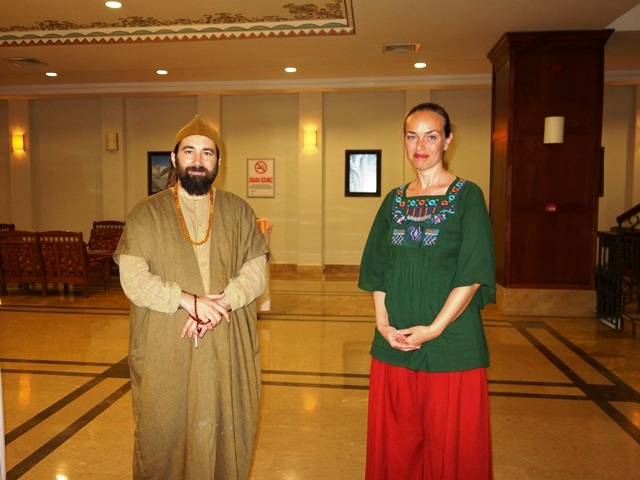
Emptier and Fuller: Pir Zia Inayat Khan on the Sacred Purpose of Sufism, with Ebru Şinik
What is the ultimate purpose of a spiritual life?
In Pir Zia Inayat Khan’s understanding, the Sufi path is a path of remembrance: remembering God, lifting one’s life towards God and gradually becoming a vessel for infinite love.
In this heartfelt conversation with Ebru Şinik, he reflects on light, prayer, intention, the five elements, human destiny and the culture of the heart.
“A person becomes emptier and yet fuller. The purpose is to become a vessel for God’s infinite love.”
A Spiritual Life Oriented Towards the One
Sufism has often been described as the mystical or inward dimension of Islam. Its forms have developed through many cultures, lineages, communities and historical periods.
For Pir Zia Inayat Khan, its essence is remembrance: remembering the divine source of life and allowing that remembrance to shape one’s actions, intentions and relationships.
The path does not ask the seeker simply to accumulate more spiritual ideas. It also involves releasing habits, identities and attachments that obstruct love.
Through this process, a person may feel inwardly emptied of self-centred limitation while simultaneously becoming fuller with presence, compassion and divine remembrance.
What Is Sufism, and What Is Its Foundation?
Pir Zia describes Sufism as “the path of remembering God and lifting up one’s life to God.”
Remembrance is not limited to repeating a sacred name or performing a ritual. It means learning to recognise the divine within ordinary experience.
As remembrance deepens, the seeker becomes less dominated by the isolated ego and more receptive to love, beauty and service.
The ultimate purpose, in Pir Zia’s words, is to become a vessel through which God’s infinite love may flow.
What Does It Mean to Become Emptier and Fuller?
Becoming Emptier
Releasing rigid self-images, excessive attachment, pride and the need to control every outcome.
Becoming Fuller
Becoming increasingly receptive to awareness, beauty, compassion, love and the presence of the divine.
Does Sufism Proceed Only Through Islamic Rituals?
Pir Zia’s answer begins with the Sufi understanding that the prophets and messengers of God have conveyed one essential spiritual message throughout human history.
From this perspective, the seeker is called to honour the message of truth without creating unnecessary division between those who have carried it.
This does not mean that all traditions, rituals and teachings are identical. Each has its own language, practices, history and sacred context.
The unity Pir Zia emphasises lies not in erasing these differences, but in recognising the divine wisdom that may shine through them.
Are Sufism and Tasavvuf the Same?
Yes. Tasavvuf is the Turkish and Arabic-derived term commonly used for the spiritual tradition known in English as Sufism.
Different regions and languages may favour different words, but both refer to the inward path of spiritual purification, remembrance and proximity to God.
What Is “The Light” in the Teachings of Pir Vilayat Khan?
Pir Zia explains light through three interconnected levels: seeing, knowing and being.
Seeing
Physical light allows the visible world to appear before our eyes.
Knowing
Consciousness is the inner light through which experience becomes known.
Being
The deepest light is the mystery through which existence itself is present.
God, in Pir Zia’s expression, is the Light of Lights, while every created form receives its existence from that light.
“Physical light is the light by which we see. Consciousness is the light by which we know. Being is the light by which we exist.”
Can Everyone Practise Light Meditation?
Pir Zia teaches that people can gradually become more aware of light and learn to absorb and radiate it as a contemplative spiritual practice.
He describes a progressive path rather than a single technique performed in exactly the same way by everyone.
The practice begins by noticing the sun, moon, stars and the luminosity within the atmosphere.
Attention may then turn towards the quality of light carried through one’s own glance.
At a later stage, the practitioner may learn the symbolic contemplative practice of “breathing light” under the guidance of an experienced teacher.
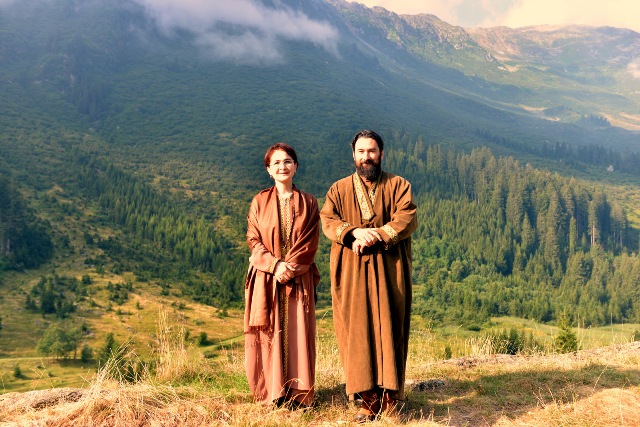
Three Stages of Contemplating Light
Observe Outer Light
Become attentive to sunlight, moonlight, stars and the subtle luminosity of the air.
Notice the Glance
Observe the quality of awareness, intention and presence communicated through the eyes.
Breathe Light
Explore the contemplative image of receiving and radiating light with appropriate guidance.
Why Does Pir Zia Recommend a Guide?
Sufi contemplative practices traditionally develop through relationship, transmission and guidance.
An experienced teacher can help determine which practice is appropriate, how frequently it should be undertaken and how the practitioner may understand the experiences that arise.
Do Mantras and the Divine Names Create the Same Vibration?
Pir Zia answers that each sacred name, word and sound possesses its own distinctive quality.
Similarities may be experienced between the primordial sound Om and the Sufi remembrance of Hu, but he does not consider them identical.
Their pronunciation, spiritual lineage, symbolic meaning and contemplative context are different.
Respecting a sacred sound therefore means approaching it within the tradition and intention from which it arises.
What Gives a Prayer Its Power?
Pir Zia describes intention as the soul of prayer.
Spoken words may give prayer its form, but intention gives it direction, sincerity and inner life.
He associates intention with will, not merely as forceful personal desire, but as the power through which human potential may be brought into fulfilment.
Destiny, in his explanation, is the potential within the human being to realise the divine nature.
The greatest act of will is therefore not insisting that life conform to personal preference, but aligning one’s will with the will of the Beloved.
“The soul of a prayer is the intention within it.”
What Is the Purpose of Elemental Breathing Practices?
In his teachings on The Holy Mysteries of the Five Elements, Pir Zia explores earth, water, fire, air and ether as both natural realities and contemplative symbols.
The breathing practices associated with them are intended to soften the experience of being separate from the world.
Through attentive breathing, the practitioner may reflect on their relationship with the ground, sky, oceans, sunlight and the unseen movement of spirit.
The purpose is not to imagine that the individual controls these elements, but to remember that human life continually participates in them.
Five Qualities of the Living World
Earth
Density, form, stability and embodiment.
Water
Flow, adaptation, feeling and continuity.
Fire
Heat, illumination, transformation and will.
Air
Movement, subtlety, breath and communication.
Ether
Spaciousness, subtle presence and the threshold of the formless.
Do the Elements Symbolise Cosmic Laws?
Pir Zia describes the elements as a bridge between form and formlessness.
Earth is solid, dense and tangible. Water is fluid. Fire is dynamic and transformative. Air is subtle and difficult to grasp.
Beyond air lies ether: the most spacious and least tangible element, symbolically approaching the realm beyond visible form.
Why Is It Important to Feel the Ground Beneath Our Feet?
The feet remain in continuous contact with the material density of the earth.
At the same time, the crown of the head opens symbolically towards the sky, which evokes the sublime, the spacious and the ineffable.
Between earth and sky stands the spine, upright like the Arabic letter alif.
The human being can therefore be contemplated as a living axis: grounded in matter, open towards transcendence and held between the two.
The feet remember the earth. The crown remembers the sky. Between them, the spine stands like the alif.
How Can Inequality, War and Violence End?
Ebru Şinik asks why technological progress does not necessarily protect humanity from cruelty, division and destructive behaviour.
Pir Zia’s answer is direct: scientific advancement alone cannot heal the world.
Knowledge increases human capability, but capability without ethical and spiritual development may intensify harm.
What the world requires, he says, is love and the development of “the culture of the heart.”
What Is the Culture of the Heart?
Compassion
Recognising the reality of another person’s suffering and responding with care.
Relationship
Remembering that individual actions influence families, communities and the living world.
Responsibility
Using knowledge and power in ways that protect dignity, life and the common good.
“Without spiritual development, scientific development cannot help the world. What is needed is the culture of the heart.”
What Is Happening to Humanity’s Collective Consciousness?
Pir Zia observes that humanity is passing through profound and turbulent change.
People are connected to one another more closely than ever through technology, travel and global systems.
Yet this closeness exists beside increasing fragmentation, polarisation and separation from the living earth.
He does not claim that an individual can control the destiny of the world. Instead, he returns responsibility to the transformation of the self.
Each person is called to fulfil their own life’s task while remembering the One to whom all life belongs.
Changing the World by Changing Ourselves
Observe
Notice the patterns through which division enters thought and behaviour.
Transform
Work patiently with fear, pride, anger and indifference.
Fulfil
Attend sincerely to the task that belongs to your life.
Remember
Return continually to the source from which life arises.
“May our lives be a clear reflection of the beauty that lives forever in the Highest Friend.”
Pir Zia Inayat Khan
Five Teachings at the Heart of the Interview
Spiritual Life Is Remembrance
The path repeatedly returns awareness to the divine source of life and love.
Light Has Many Levels
Light may be contemplated as physical perception, consciousness and being itself.
Intention Is the Soul of Prayer
Words receive their spiritual direction from the sincerity and will carried within them.
Progress Requires the Heart
Technology and knowledge cannot replace compassion, ethics and spiritual maturity.
Transformation Begins with the Self
We cannot control the whole world, but we can work with the consciousness, choices and responsibilities entrusted to us.
Making Space for Infinite Love
Pir Zia Inayat Khan’s words bring the spiritual journey back to a simple but demanding question: what are we willing to release so that love may enter more fully?
Becoming emptier does not mean losing the meaning of life. It means loosening what prevents us from recognising that meaning.
In the space created by remembrance, intention and surrender, the human heart may become both quieter and more complete.
Sufism, Light, Intention and the Five Elements
What is Sufism?
Sufism is commonly described as the inward or mystical dimension of Islam. It includes traditions of remembrance, spiritual purification, love, service and closeness to God.
Are Sufism and tasavvuf the same?
Yes. Tasavvuf is the term commonly used in Turkish and related languages for the spiritual tradition known in English as Sufism.
What does remembrance mean in Sufism?
Remembrance means returning awareness to God through prayer, sacred names, contemplation, ethical conduct and conscious daily living.
What does it mean to become emptier and fuller?
It refers to becoming less dominated by self-centred attachments while becoming more receptive to love, presence and divine remembrance.
What are the three levels of light described by Pir Zia?
He speaks of physical light, by which we see; consciousness, by which we know; and being, through which we exist.
Can anyone practise light meditation?
Basic contemplation of natural light may be accessible to many people. More specialised Sufi practices should be learned with appropriate guidance.
Are Om and Hu the same sacred sound?
No. Pir Zia acknowledges possible similarities in how they may be experienced, but each has its own sound, meaning and traditional context.
What is the relationship between prayer and intention?
Pir Zia describes intention as the soul of prayer. It gives the prayer sincerity, direction and inner power.
What do the five elements represent?
Earth, water, fire, air and ether may be contemplated as qualities of nature and as a symbolic bridge between tangible form and formlessness.
What is the culture of the heart?
It is a way of living guided by compassion, ethical responsibility, relationship and awareness of the dignity of life.
Can spiritual development change the world?
Spiritual development does not offer immediate control over world events, but it can influence individual behaviour, relationships, leadership and collective responsibility.
Spiritual Practice Note
The teachings and interpretations in this interview reflect Pir Zia Inayat Khan’s Sufi perspective. Other Sufi traditions and teachers may explain particular concepts or practices differently.
Light meditation, elemental breathing and sacred sound practices are contemplative and spiritual disciplines. They should not be presented as treatments for medical or psychological conditions.
Anyone who experiences persistent anxiety, breathing difficulty, dissociation or significant emotional distress should seek support from an appropriately qualified healthcare professional.
Ebru Şinik
Wellbeing Coach & Ayurveda Instructor,
Holistic Health Author