

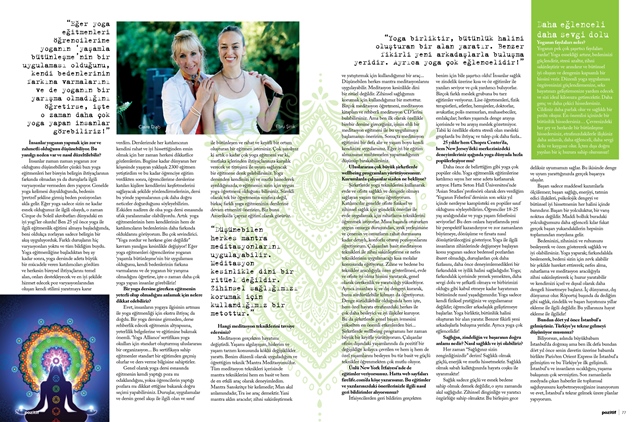
Türkiye’s Wellbeing Pioneer Ebru Şinik with Claire Diab, Founder of The American Yoga Academy
In this special conversation, Wellbeing Coach Ebru Şinik speaks with yoga and health educator Claire Diab about making yoga accessible to people of different ages, abilities and lifestyles.
Their conversation explores Modern Day Yoga, mantra meditation, teacher selection, corporate wellbeing and the relationship between health, happiness and true success.
Yoga is not a competition or a demonstration of extreme flexibility. It is a personal practice that can be adapted to the body, needs and experience of each individual.
The American Yoga Academy Says That Yoga Is for Everyone, Regardless of Age, Size, Shape or Religion. Why Should People Practise Yoga?
“Everyone should practise yoga because it makes you feel good.”
Claire Diab
Yoga can help people feel more connected with their bodies and more present in their daily lives. With regular and appropriately adapted practice, many people experience greater mobility, strength, body awareness and calmness.
The word yoga is traditionally associated with union: the integration of body, mind and inner awareness.
People from different backgrounds and lifestyles can explore yoga without having to fit a particular image or level of flexibility.
For me, yoga is not merely physical exercise. It is a philosophy and a way of living that can support a greater sense of wholeness, balance and connection with others.
What Distinguishes the Modern Day Yoga Style You Created from Other Yoga Styles?
“Modern Day Yoga for the Modern Day Yogi is my motto.”
Claire Diab
My mission is to help people understand that yoga can be practised by anyone, regardless of lifestyle, fitness background or previous experience.
Yoga does not judge the person practising it. It meets the student where they are.
Each class should provide variations so that students can work safely and comfortably according to their own bodies.
The American Yoga Academy approaches yoga through movement, breathing, relaxation, meditation and the practical application of wellbeing principles both on and off the mat.
What Are the Benefits of Yoga?
“There are so many wonderful benefits of yoga.”
Claire Diab
A well-designed yoga practice can support flexibility, muscular strength, balance, body awareness and relaxation.
It may also help people create space away from mental noise and experience a greater sense of inner balance.
Areas Yoga May Support
Mobility and Strength
Appropriate postures can support mobility, coordination, balance and functional strength.
Breathing Awareness
Breath awareness may help practitioners recognise tension and slow down during stressful moments.
Emotional Wellbeing
Regular practice may support relaxation, confidence and a kinder relationship with the body.
Rest and Recovery
Gentle movement, breathing and relaxation may help prepare the body and mind for rest.
Many People Think Yoga Is Difficult. Is This a Misconception?
People sometimes imagine that yoga means placing the body into complicated, pretzel-like positions. But yoga is not a flexibility competition.
If yoga were only about extreme flexibility, circus performers would automatically be the world’s greatest yogis.
When I first trained as a teacher, I learnt a specific and physically demanding sequence. There were few alternatives for students with different needs.
After watching people struggle, I began creating variations that allowed each student to practise more comfortably.
A good teacher should observe the room, provide appropriate alternatives and remind students that yoga is a personal practice, not a performance.
The Practice Should Adapt to the Person
Respect Your Range
Never force the body into pain or compare your posture with another person’s.
Use Variations
Postures can be modified with chairs, blocks, cushions or a smaller range of movement.
Communicate
Tell the teacher about pain, pregnancy, recent surgery or another condition that may require modification.
What Should People Consider When Choosing a Yoga Instructor?
Begin by learning about the instructor’s education, experience and professional background.
Training credentials can offer useful information, but the teacher’s behaviour during class is equally important.
Notice whether the instructor is focused primarily on demonstrating their own practice or is actively observing and supporting the students.
A responsible instructor explains the purpose of a posture, offers alternatives, respects personal boundaries and does not pressure students to continue through pain.
The right teacher is someone who helps you feel safe, respected and better informed about your own body. It is also completely acceptable to learn from more than one teacher.
Which Meditation Technique Do You Recommend?
“Meditation has changed how I look, how I feel and how I live my life.”
Claire Diab
The method I personally practise and teach is mantra meditation.
A mantra is a sound, word or short phrase used as an object of attention. Repeating it can give the mind a simple point to return to whenever attention wanders.
Mantra practice does not need to be connected to a particular religion. Practitioners can select a neutral sound or a word that feels personally meaningful.
Beginners may benefit from working with a responsible teacher who can introduce the practice gradually and answer questions.

From Personal Practice to Corporate Wellbeing
Claire Diab has adapted simple yoga, posture, breathing and meditation principles for people working in many different professions.
The objective is not to turn the workplace into a yoga studio, but to offer practical habits that employees can safely integrate into the working day.
What Do Participants Learn in Your Corporate Wellbeing Programmes?
In corporate programmes, I teach practical health and wellbeing habits that employees can use both at work and at home.
We examine desk posture, the placement of the feet, spinal alignment and unnecessary tension in the jaw, shoulders and neck.
Participants also learn how to take short breathing pauses and use simple meditation techniques to step away from continuous mental stimulation.
These practices are intended to support awareness, comfort and self-regulation during the working day.
My experience has been very positive. People are often surprised that small, practical adjustments can make their working environment feel more manageable.
Practical Areas Addressed in Corporate Programmes
Desk Posture
Awareness of the feet, hips, spine, shoulders, jaw and screen position.
Breathing Pauses
Short, gentle pauses that help employees notice tension and reset their attention.
Everyday Movement
Simple movements that can be performed safely without specialist clothing or a yoga mat.
Mental Transition
Relaxation and meditation techniques that help create a clearer boundary between working time and recovery time.
Can These Programmes Be Adapted to Different Professions?
Yes. I have taught people working in many different fields, including firefighters, teachers, physical therapists, athletes, nurses, physicians, lawyers, police officers, accountants and real-estate professionals.
Every occupation has different physical and psychological demands.
The programme should therefore be adapted to the realities of the participants rather than applying the same sequence to every group.
Is Yoga Becoming More Popular Around the World?
Interest in yoga, meditation and teacher education has grown substantially during my years of teaching.
More people are beginning to understand that yoga is about more than performing a posture.
It can also involve conscious eating, compassion, open-mindedness, self-observation and the way we relate to other people.
Yoga classes can create a sense of community: a place where people meet, learn and practise alongside others with similar intentions. Yoga can also be joyful and fun.
What Is the True Meaning of Health, Wellbeing and Success?
“Your health is your wealth.”
Claire Diab
Health means more than having a strong or flexible body. It includes energy, emotional stability, mental clarity, restorative sleep and enthusiasm for life.
Wellbeing also involves relationships, laughter, joy, meaningful activity and feeling supported by the people around us.
True success cannot be measured only through financial abundance. It also includes health, fulfilling relationships, emotional balance and a sense of purpose.
Success is a journey rather than a final destination. The aim is not simply to add years to life, but to add life, awareness and meaning to those years.
Have You Visited Türkiye, and What Do You Know About Yoga Practices Here?
Yes. Türkiye also has a personal place within my family history because my grandfather was born in Istanbul.
I travelled to Istanbul for a workshop with Ebru Şinik, who had previously been one of my students during her international education.
From what I have observed, yoga practice in Türkiye reflects much of the variety seen in the United States.
Practitioners explore different approaches, including Hatha, Iyengar, Ashtanga, Vinyasa and Kundalini yoga.
Four Ideas That Stand Out
Yoga Should Be Accessible
The practice should be adapted to different bodies, ages, needs and levels of experience.
The Teacher Must Observe
A responsible instructor focuses on the students rather than turning the class into a personal performance.
Meditation Can Be Simple
A short mantra can give the mind a steady point of attention without requiring a complicated ritual.
Wellbeing Is Holistic
Physical health, mental clarity, meaningful relationships and purpose are interconnected.
A sustainable yoga practice is not measured by the difficulty of the posture, but by the awareness, balance and kindness it brings into daily life.
Be Well, Be Happy!
Yoga, Meditation and Choosing a Teacher
Is yoga suitable for beginners?
Yes. Beginners should choose a class that provides clear instructions, gradual progression and alternatives for different levels of mobility.
Do I need to be flexible before beginning yoga?
No. Flexibility is not a prerequisite. The practice should begin from the body’s current comfortable range.
How can I choose a suitable yoga teacher?
Review the teacher’s training and experience, and observe whether they offer variations, respect boundaries and pay attention to student safety.
Does Yoga Alliance registration guarantee that a teacher is suitable for me?
Registration can provide information about completed training, but personal experience, communication, safety awareness and teaching style should also be considered.
Can yoga help with stress?
Yoga may support stress management through movement, breathing, relaxation and attention practices. Individual responses vary.
What is mantra meditation?
Mantra meditation uses the repetition of a sound, word or short phrase as a focus for attention.
Is mantra meditation connected to religion?
Mantras can have spiritual or religious origins, but a practitioner may also use a neutral sound or phrase in a non-religious attention practice.
Can yoga guarantee weight loss?
No. Yoga may support movement, stress regulation and healthier habits, but weight is influenced by many nutritional, medical, behavioural and environmental factors.
What can corporate yoga programmes include?
They may include posture awareness, gentle desk-based movement, breathing pauses, relaxation and short attention practices adapted to the workplace.
Wellbeing Note
Yoga and meditation may support movement, stress regulation, relaxation and general wellbeing, but their effects vary from person to person.
People who are pregnant or who have an injury, chronic condition, significant pain or recent surgery may require professional guidance and modified practices. Yoga and meditation do not replace medical or psychological care.
Ebru Şinik
Wellbeing Coach & Ayurveda Instructor,
Holistic Health Author