
Ujjayi Pranayama: Breathing Technique for Calming the Mind
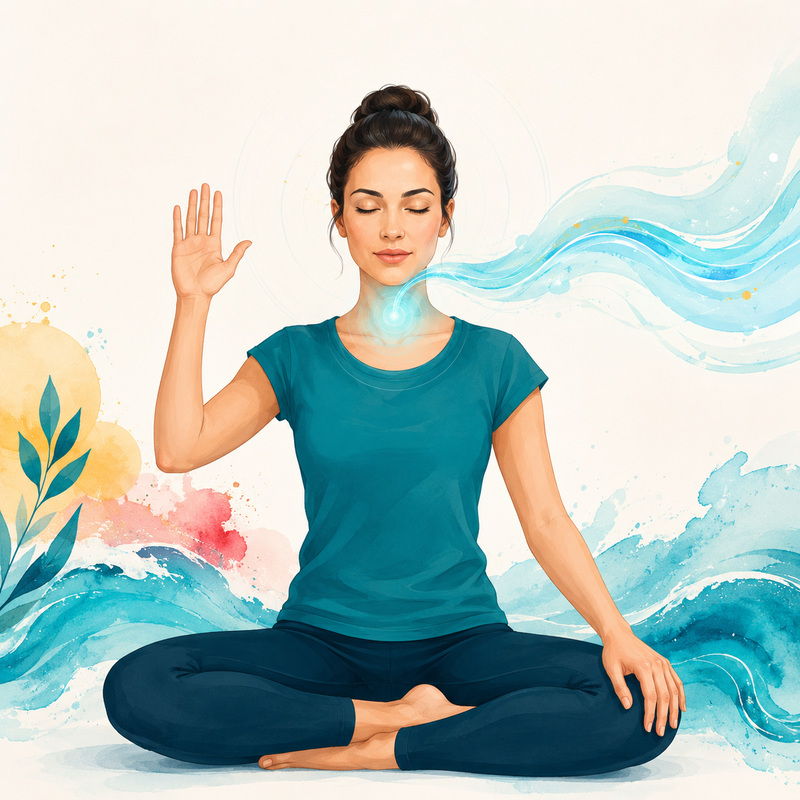
Ujjayi Pranayama is a gentle yogic breathing technique often referred to as ocean breath because of the soft whispering sound created in the throat.
Practised mindfully and without strain, it may help calm mental restlessness, increase breath awareness and support a more grounded inner state.
Ujjayi is less about force and more about rhythm. The aim is to create a smooth, steady and soothing breath that supports calm attention.
Review the Guidance Carefully
Before practising the pranayama techniques described by Ebru Şinik in Hidden Life in Breath, read the application instructions and contraindications carefully.
It is also strongly recommended that you watch the demonstration video before your first practice, especially to understand the throat action, hand movement and nasal exhalation pattern.
Stop immediately if you feel chest discomfort, dizziness, breathlessness, pressure or anxiety during the exercise.
A Gentle Whispering Breath
Ujjayi is a pranayama practice in which the throat is slightly narrowed to create a soft and subtle sound during the breath.
This sound is often described as ocean-like, wave-like or whispering. The purpose is not to breathe loudly, but to create a smooth and steady internal rhythm.
Different yoga schools teach Ujjayi in slightly different ways. In this article, we are following the version taught by Ebru Şinik.
Basic Guidelines
Posture
Practise seated upright on the floor or on a chair.
Children
Suitable only for children over the age of 7 with guidance.
Breath Count
Begin with 7 breaths and increase gradually only if comfortable.
Frequency
Practise once a day within this structured method.
Do Not Practise Without Guidance If You Have:
- Chest pain
- Uncontrolled high blood pressure
- A recent epileptic seizure within the last 6 months
- A medical condition that makes breath control difficult
- Dizziness, faintness or significant discomfort during practice
What May Ujjayi Support?
Ujjayi should be presented as a supportive breathing practice, not as a treatment or cure for medical conditions.
Calming the Mind
The rhythm and sound of the breath may help reduce mental restlessness and create a more settled inner state.
Focused Attention
Following the sound and sensation of the breath may support concentration and present-moment awareness.
Nervous System Regulation
Slow, controlled breathing may help shift the body towards a calmer physiological state.
Evening Relaxation
A comfortable practice may support relaxation as part of a restful evening routine.
Breath Awareness
Ujjayi helps practitioners become more aware of the pathway, texture and length of each breath.
Mind-Body Connection
The coordinated breath and hand movement in this version of the practice may deepen internal awareness.
Ujjayi is not a cure for sleep apnoea, vertigo, thyroid disease, depression, attention disorders, infections, tumours or cancer. It can be used as a supportive wellbeing practice only.
How to Practise This Ujjayi Variation
- Sit comfortably upright on the floor or on a chair.
- If seated on a chair, make sure your knees are at the same level as your hips.
- Gently close your eyes and mouth.
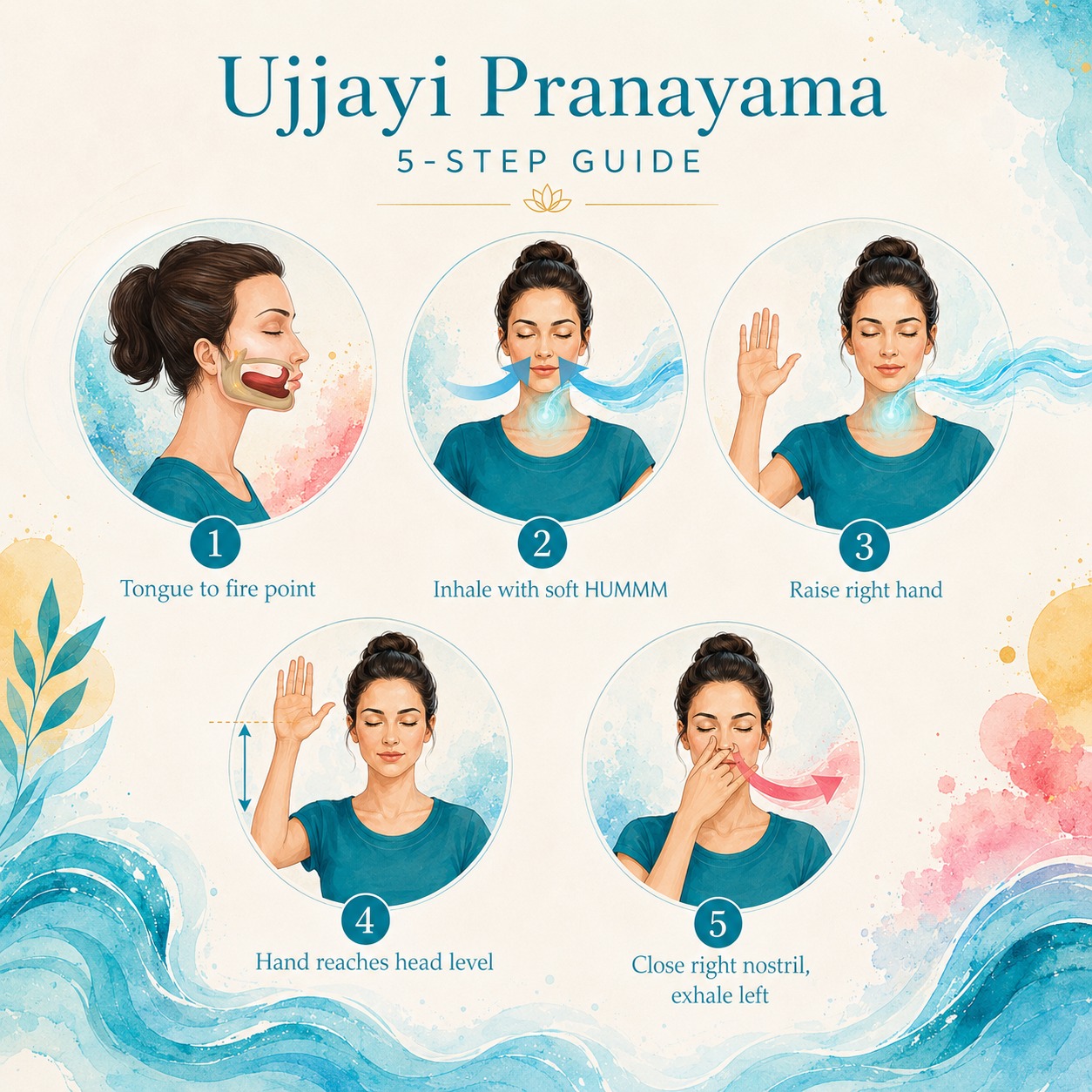
- Place the tip of the tongue softly behind the upper front teeth.
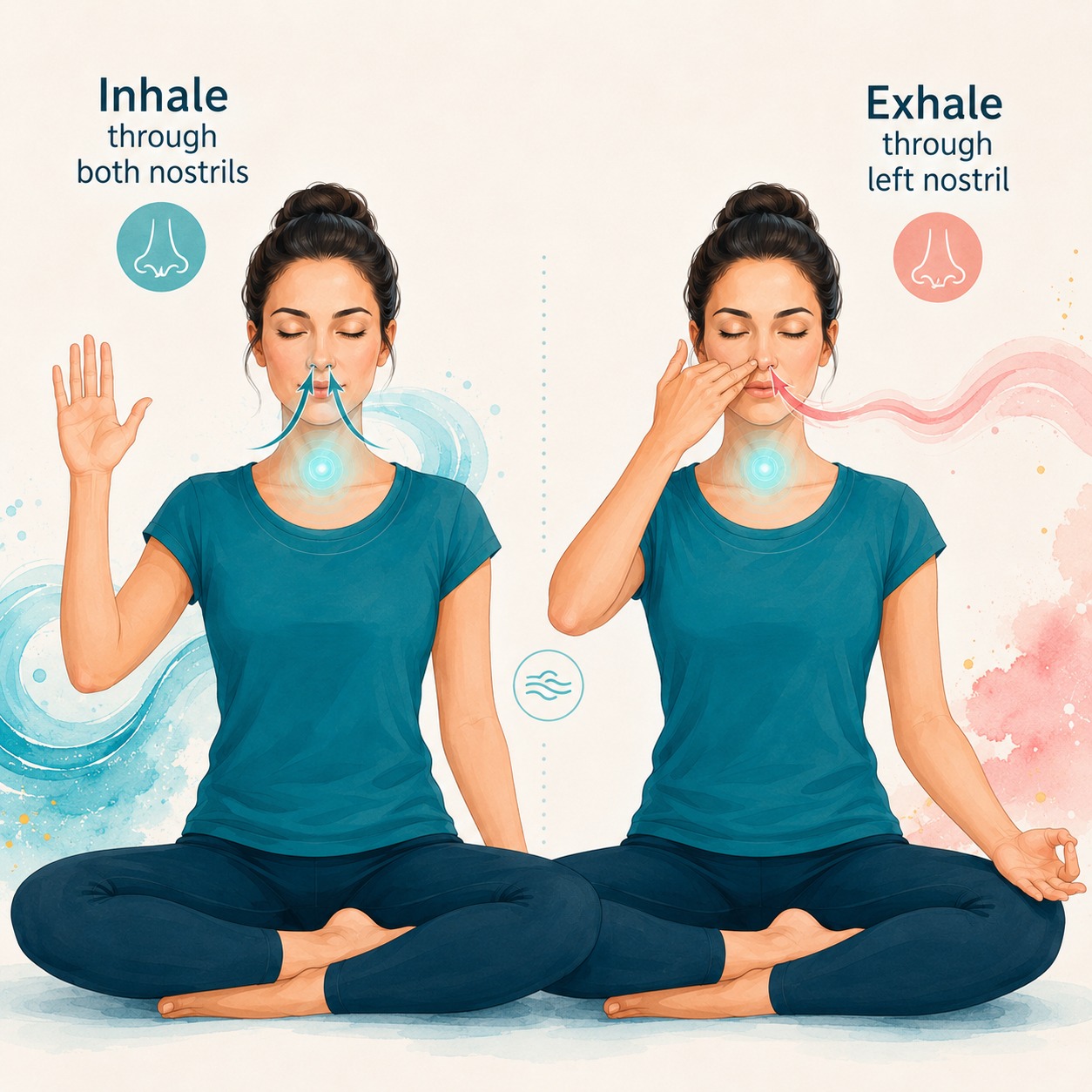
- Inhale through the nose while creating a soft internal “hummm” sound, feeling an ocean-like whisper at the back of the throat.
- At the same time, slowly raise your right hand with the rhythm of the inhalation.
- When the inhalation is complete, gently close the right nostril with the right thumb.
- Exhale slowly and steadily through the left nostril.
- Repeat this cycle for 7 breaths at the beginning.
- Rest quietly after the final breath and return to natural breathing.
How to Build the Practice Week by Week
Week 1
Practise 7 breaths once a day.
Following Weeks
Increase by 1 breath per week only if the practice remains comfortable.
Upper Limit
The structured practice may continue up to 17 breaths, which is the maximum in this system.
Why 17 Breaths?
In this teaching system, the practice is gradually increased up to 17 breaths.
This number is associated with a traditional Vedic understanding of the energy body and its main vibrational principles.
This is a traditional spiritual interpretation rather than a medical rule. Not everyone needs to reach 17 breaths to experience the calming quality of the practice.
Watch the Ujjayi Pranayama Practice Video
Watch Ebru Şinik’s guided video to understand the correct sound, posture, nasal exhalation and pacing before practising on your own.
Watch the Practice VideoHidden Life in Breath
Ebru Şinik’s breathing guide introduces pranayama practices with detailed explanations, durations, application notes and safety reminders.
If you would like to explore breathing practices in a more structured way, the book offers additional guidance and a broader perspective.
Discover the BookA calm breath can become a bridge between the body and the mind.
Be Well, Be Happy!
Ujjayi Pranayama
What is Ujjayi Pranayama?
Ujjayi is a yogic breathing technique that creates a soft ocean-like sound through a gentle narrowing of the throat.
Why is it called ocean breath?
It is often called ocean breath because the sound of the breath resembles a gentle wave or whisper.
Can Ujjayi help calm the mind?
It may support mental calmness and focused attention when practised comfortably and regularly.
Is Ujjayi a treatment for sleep disorders or anxiety?
No. Ujjayi can be a supportive wellbeing practice, but it is not a substitute for medical or psychological treatment.
How many breaths should beginners do?
Within this method, beginners start with 7 breaths once a day and increase only gradually.
Can children practise Ujjayi?
It may be practised by children over the age of 7 only with suitable guidance and supervision.
What should I do if I feel dizzy or uncomfortable?
Stop immediately, return to natural breathing and rest quietly. Do not continue the practice during that session.
Wellbeing Note
Ujjayi Pranayama may support relaxation, breath awareness and focused attention.
It does not diagnose, prevent or treat sleep apnoea, vertigo, depression, anxiety disorders, thyroid disease, ADHD, infections, tumours or another medical condition.
Ebru Şinik
Wellbeing Coach & Ayurveda Instructor