
The Magic and Medicine of Palo Santo: David Crow in Conversation with Ebru Şinik
Palo Santo has travelled from the dry forests and ceremonial traditions of South America into homes, meditation spaces and aromatic wellbeing practices around the world.
In this conversation, Ebru Şinik speaks with author, herbalist and acupuncturist David Crow about its history, sacred smoke, aromatic chemistry, ecological importance and responsible use.
To understand Palo Santo fully, we must look beyond its fragrance and consider the tree, the forest, the people who have protected its knowledge and the responsibility that comes with using it.
A Tree Surrounded by Fragrance, Tradition and Mystery
The Spanish name Palo Santo is commonly translated as “sacred wood” or “holy wood.”
The name is used for more than one tree, but the species at the centre of David Crow’s journey is Bursera graveolens, an aromatic tree associated with the seasonally dry forests of parts of Latin America.
Its wood has traditionally been burned as incense, used in household and ceremonial settings and valued for its distinctive sweet, woody and citrus-like aroma.
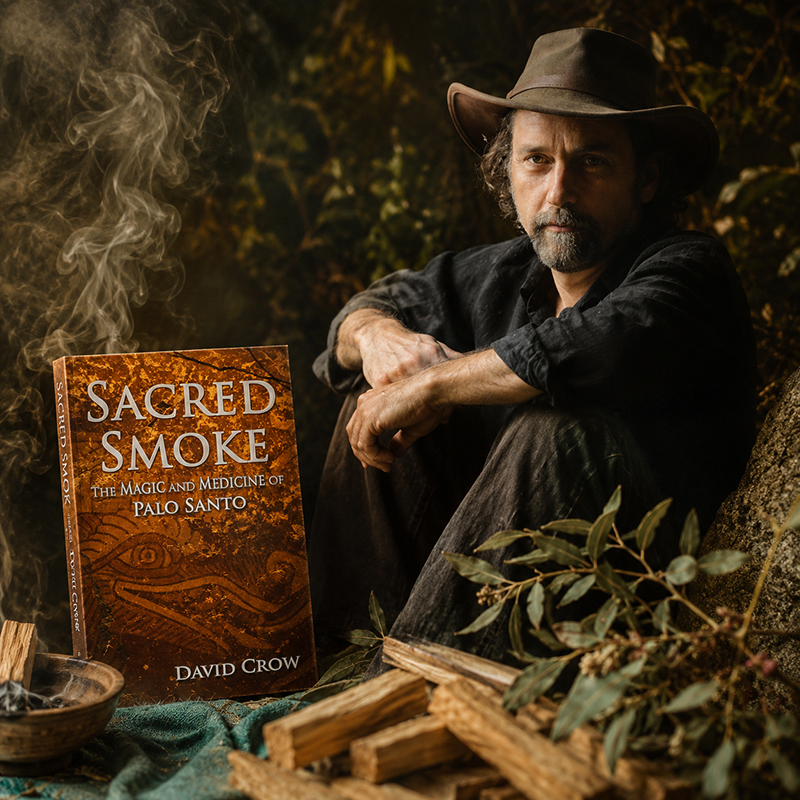
Crow’s book Sacred Smoke: The Magic and Medicine of Palo Santo explores not only the tree’s uses, but also the human relationships, ecological knowledge and spiritual experiences that have developed around it.
Botanical Medicine, Traditional Knowledge and Ecological Responsibility
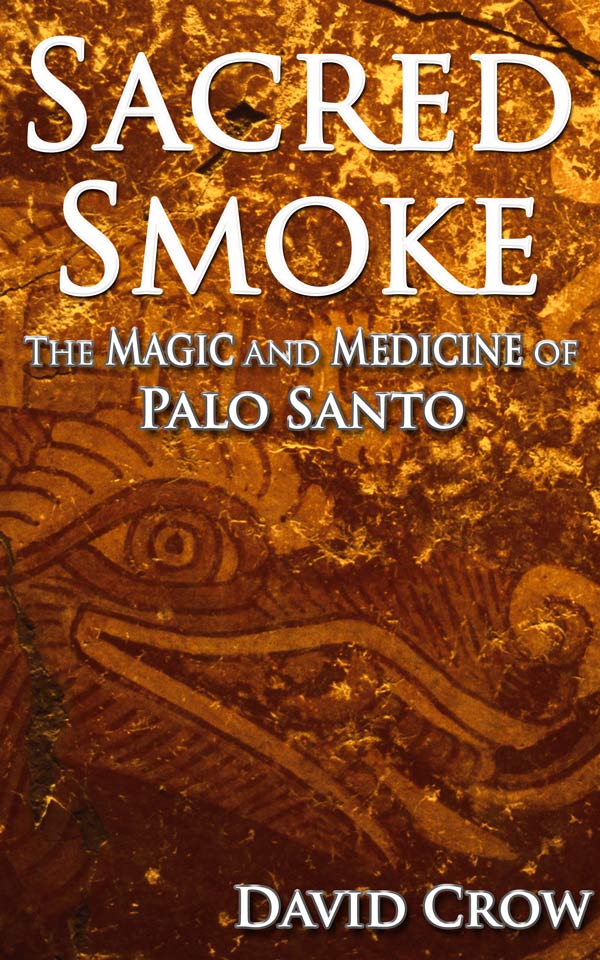
David Crow is an acupuncturist, herbalist, educator and author whose work brings together botanical medicine, traditional healing systems and ecological sustainability.
His books include In Search of the Medicine Buddha, which reflects on his studies of Tibetan and Ayurvedic medicine in the Himalayas, and Plants That Heal, a collection of writings on botanical medicine.
In Sacred Smoke, Crow follows the story of Palo Santo through Ecuador, combining travel writing, ethnobotanical observation, aromatic research and his encounters with the people caring for the tree.
He is also the founder of Floracopeia , an organisation built around aromatic plants, essential oils and ecologically responsible agriculture.
Four Dimensions of Palo Santo
Traditional Knowledge
Generations of local use have shaped the cultural meaning of the wood, fragrance and smoke.
Sacred Smoke
Palo Santo has been used in prayer, purification rituals and practices intended to mark a transition in space.
Aromatic Chemistry
Its essential oil contains aromatic compounds whose proportions vary with origin, plant material and distillation.
Ecological Stewardship
The future of Palo Santo depends on protecting its habitat and ensuring that harvesting is legal and traceable.
More Than an Aromatic Product
Palo Santo is now frequently encountered as incense sticks, pieces of aromatic wood, essential oil or an ingredient in fragrances.
For David Crow, however, reducing the tree to a commercial aroma would mean overlooking the relationships that give it meaning.
Its story includes the forest where it grows, the natural ageing of its wood, traditional practices, local livelihoods, scientific curiosity and the environmental consequences of international demand.
Dante Bolcato’s First Encounter with Palo Santo
A central figure in Crow’s account is Dante Bolcato, whom he describes as a researcher, distiller, storyteller and protector of Palo Santo knowledge.
According to the story Crow records, Dante’s relationship with the tree began not with a plan to manufacture a medicinal product, but with a powerful encounter with its fragrance in Ecuador’s Machalilla region.
The aroma reawakened an earlier dream of creating a perfume capable of expressing the dry forest, equatorial heat and richness of the land.
Yet the tree’s traditional uses, ecological setting and possible therapeutic applications soon became inseparable from his work as a distiller.
“It was a powerful experience. I remember having an ancestral connection. I thought, ‘I have met a very strong medicine that can help people who are sad.’”
Dante Bolcato, as recounted by David Crow
What Gives Palo Santo Its Distinctive Fragrance?
Chemical analyses of Bursera graveolens essential oil have identified mixtures of monoterpenes and sesquiterpenes.
Limonene is frequently reported among its prominent constituents, together with compounds such as alpha-terpineol, carvone, menthofuran and others.
The exact profile is not identical in every sample. Geography, soil, climate, the part of the tree used, the age and condition of the wood and the method of distillation may all influence the final composition.
This chemistry helps explain the wood’s layered aroma, which may be perceived as citrus-like, resinous, woody, sweet, spicy or balsamic.
Chemistry Is Not the Same as Clinical Proof
Laboratory studies can identify compounds in an essential oil and investigate possible antimicrobial, antioxidant, anti-inflammatory or other biological activities.
Such results are scientifically interesting, but they do not automatically prove that burning Palo Santo or inhaling its oil will prevent, diagnose or treat a medical or psychological condition.
Human clinical evidence remains much more limited than the long list of wellbeing claims sometimes associated with Palo Santo in commercial descriptions.
Fragrance, Memory and Emotional Experience
The sense of smell has a close relationship with memory, attention and emotion. For this reason, aromatic rituals may feel immediately meaningful or calming to some people.
In Crow’s account, Dante was particularly interested in the way Palo Santo’s fragrance appeared to affect people experiencing sadness, emotional heaviness or the pressure of urban life.
These observations belong to the history of personal experience and traditional practice surrounding the tree. They should not be presented as a substitute for psychiatric, psychological or medical treatment.
The most responsible interpretation allows traditional knowledge, lived experience and scientific investigation to remain in conversation without confusing one form of evidence with another.
Smoke, Prayer and the Four Directions
Crow records Dante’s descriptions of ceremonies in which Palo Santo smoke was used alongside prayer, invocation and appeals to the sun, moon, water and Pachamama.
In one ritual, the doors and windows were closed and the room was filled with dense smoke while the shaman addressed the natural elements and prayed for a distressed participant.
Dante’s attention was drawn not only to the words and symbolic actions, but also to a scientific question: what aromatic substances were present in the smoke, and how might they influence perception and emotion?
The story captures a recurring theme in Sacred Smoke: spiritual interpretation and scientific curiosity do not always need to cancel one another.
Understanding Ritual in Its Cultural Context
A ceremonial practice cannot be understood only by analysing the material being burned.
Intention, prayer, community, expectation, sensory experience and the relationship between practitioner and participant may all influence how a ritual is perceived.
Crow’s narrative describes these practices as experiences rooted in particular people, landscapes and cultural histories.
Respectful engagement therefore requires more than purchasing an aromatic stick. It asks us to acknowledge where the practice came from and avoid presenting diverse Indigenous traditions as a single, interchangeable lifestyle trend.
A Daily Practice of Attention and Gratitude
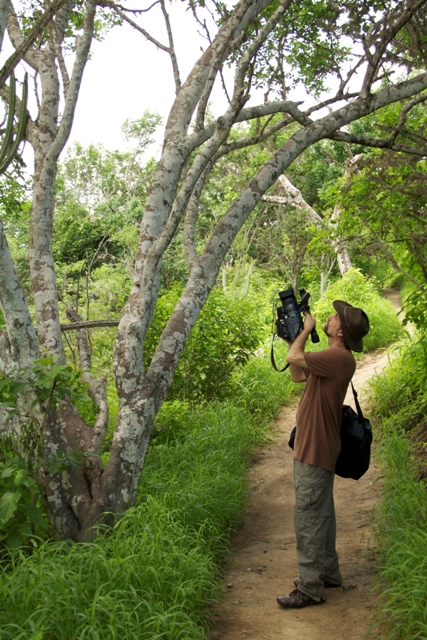
Dante described lighting a Palo Santo fire at dawn and returning to the altar again near sunset.
The practice was not presented as an escape from his work. It was a way of reflecting on the forest, the wood, reforestation, family responsibilities and the day ahead.
Crow imagines him sitting in the shifting colours of the equatorial morning, surrounded by birdsong, village sounds and the rising fragrance of the wood.
Repetition transformed the altar into a place where scientific observation, ecological commitment and gratitude could meet.
“I connect with the positive part of Palo Santo. I say thank you for the day today. I look at the leaves on the trees. I think about the wood, about reforestation.”

Palo Santo Begins with a Living Ecosystem
The international popularity of Palo Santo can make the finished product appear disconnected from the dry forest where the tree grows.
Yet every piece of wood belongs to a wider ecosystem of soil, seasonal rainfall, insects, birds, neighbouring plants and local communities.
Protecting the tree therefore requires more than planting individual seedlings. It also requires protecting habitat, preventing illegal extraction and supporting responsible local management.
The most meaningful question is not simply, “Is Palo Santo endangered?” but also, “Where did this particular product come from, and can its origin be verified?”
What Should Responsible Palo Santo Sourcing Include?
Legal and Traceable Origin
Sellers should be able to explain the country, region and management system from which the wood or oil was obtained.
No Cutting of Living Trees
In regulated harvesting systems, collection should focus on naturally fallen, dead wood and permitted forest residues.
Benefit for Local Communities
Responsible trade should support the people managing and protecting the forests rather than bypassing them.
Habitat and Reforestation
Planting should be accompanied by long-term habitat protection, monitoring and prevention of illegal harvesting.
Use Less, Know More
Responsible consumption does not always require finding another product to purchase.
It may mean using a small amount, allowing the wood to extinguish naturally, avoiding unnecessary daily burning and asking suppliers detailed questions about origin.
A single well-sourced piece used with awareness may carry more meaning than frequently burning an anonymous product whose journey cannot be traced.
A Piece of Wood That Time Had Transformed
Near the end of Crow’s journey, Dante brought him into the workshop and revealed an extraordinary, heavily aged piece of Palo Santo wood.
One cut surface appeared polished and burnished, with rings of gold, brown, yellow and earth tones. The wood had become unusually dense and hard, almost stone-like, while still carrying its fragrance.
Crow called it a gem. Dante agreed, then added the quality that made it different from any mineral treasure:
“Yes, it is a gem. But it is aromatic.”
When Crow asked its price, Dante explained that such pieces had become extremely rare.
He then offered it as a gift—something that, in his understanding, could not be reduced to a commercial transaction.
“You cannot buy this. It is something that can only be given.”
A Farewell That Contained the Whole Journey
On the final morning, Crow and his companions returned to Dante’s sanctuary before beginning the long journey towards Quito.
After a final espresso and last-minute conversations, Dante accompanied them to the gate.
“I never say goodbye without an embrace.”
In that embrace, Crow saw the many dimensions of the man who had become his teacher.
Distiller, ethnobotanical researcher, storyteller, forest caretaker, entrepreneur, community elder, father, husband and a person who returned to the Palo Santo fire each morning and evening.
The Many Roles of a Forest Guardian
Distiller and Observer
He learned through close attention to wood, fire, water, steam and the slow emergence of aromatic oil.
Keeper of Knowledge
He gathered stories and uses remembered by local elders as younger generations moved away from the traditions.
Forest Caretaker
His work included propagation, seedling care, replanting and a vision of restoring extensive Palo Santo forests.
Community Leader
He sought to connect ecological resources with dignified local work, family prosperity and long-term responsibility.
Five Lessons from the Palo Santo Story
Begin with the Tree
Palo Santo is a living species within a vulnerable ecosystem, not simply an aromatic commodity.
Honour the History
Its modern popularity rests on generations of local knowledge, practice and observation.
Respect the Limits of Research
Interesting chemistry and laboratory findings should not be converted into unsupported promises of medical treatment.
Ask Where It Came From
Legal origin, traceability and community benefit matter more than vague claims that a product is “natural.”
Let Reverence Influence Consumption
Treating a plant as sacred should lead to more careful, informed and moderate use, not to greater consumption.
The Meaning Behind the Fragrance
David Crow’s Palo Santo story is ultimately about more than smoke, essential oil or perfume.
It is about how knowledge is preserved, how a person forms a relationship with a tree and how an ecological resource may become either a source of regeneration or exploitation.
The fragrance invites us to pause. The deeper story invites us to become responsible.
Palo Santo, Sacred Smoke and Responsible Use
What is Palo Santo?
Palo Santo is a common Spanish name meaning “sacred wood” or “holy wood.” In this article, it refers primarily to the aromatic tree Bursera graveolens.
Where does Bursera graveolens grow?
The species is native to parts of Latin America and is associated particularly with seasonally dry tropical forests.
Why is Palo Santo burned?
It has traditionally been burned for fragrance, household use, prayer, ceremony and practices associated with purification or changing the atmosphere of a space.
Does Palo Santo clear negative energy?
Energy cleansing is a spiritual and cultural interpretation rather than a medically measurable effect. Some people use the fragrance as part of a personal ritual for reflection, transition or intention.
What is found in Palo Santo essential oil?
Analyses commonly report mixtures of aromatic compounds, including limonene and other monoterpenes and sesquiterpenes. The proportions may vary considerably between samples.
Can Palo Santo treat anxiety or depression?
Palo Santo should not be presented as a proven treatment for anxiety, depression, panic attacks or another medical or psychological condition. Professional support should be sought when symptoms are persistent or severe.
Is Palo Santo endangered?
Conservation assessments and legal classifications may differ by country and population. Even where a species has a broad global distribution, local forests may still face illegal extraction, habitat loss and weak traceability.
How can I choose responsibly sourced Palo Santo?
Look for clear information about the species, country and region of origin, harvesting permission, traceability and whether the material came from naturally fallen or dead wood.
Is Palo Santo smoke safe for everyone?
No form of smoke is completely harmless. People with asthma, respiratory sensitivity, migraines or fragrance sensitivity may experience discomfort and may prefer a smoke-free practice.
Can Palo Santo essential oil be applied directly to the skin?
Concentrated essential oils may cause irritation or sensitisation. They should not be applied undiluted unless a qualified professional has advised that use for the individual.
Research and Safety Note
Information about traditional plant use describes cultural practices and historical experience. It should not be interpreted as proof that a product is safe or clinically effective for a particular condition.
Essential oils are concentrated substances. They should not be swallowed or applied undiluted without appropriate professional guidance. Keep them away from children and pets.
Burning wood or incense releases smoke and particulate matter. Use only a small amount in a well-ventilated space and discontinue use if irritation, headache, coughing or breathing discomfort occurs.
Anyone who is pregnant, breastfeeding, living with asthma, epilepsy, allergies or another medical condition should consult a qualified healthcare professional before using concentrated essential oils.
Ebru Şinik
Wellbeing Coach & Ayurveda Instructor,
Holistic Health Author