
Ebru Sinik, Wellbeing Coach, Ayurveda Instructor, Holistic Health Author & Chairwoman of the Wellbeing Association, spoke to Pozitif Magazine about the story behind her book Nefeste Saklı Hayat, the role of controlled nasal breathing in everyday life and the essential principles of safe breathing practice.
The interview explores a wide range of topics, from stress management and sleep quality to the safe application of breathing techniques and the practices that may be suitable for children.

Why is nasal breathing so important?
Pozitif Magazine:
You repeatedly emphasise nasal breathing. Until now, we have generally heard about sessions based on breathing through the mouth. What are you referring to that is different?
Ebru Sinik:
I am talking about the fundamental influence of the nose, the organ designed for breathing, on our overall wellbeing and emotional state.
When we understand how controlled and rhythmic breathing through the nose can support different needs, we can see how these practices may help make everyday life easier and more enjoyable.
In my book, I explain the importance of nasal breathing for physical, mental and emotional balance, together with its scientific foundations.
“I wrote this book to provide safe access to reliable knowledge”
Pozitif Magazine:
Who are you, and why did you feel the need to write a book like this?
Ebru Sinik:
Following my education in meditation and Ayurveda, I founded Yükselen Çağ Wellbeing Center for people who want to feel better, live more happily and remain open to personal development. We express our approach through the words “Be Well, Be Happy!”
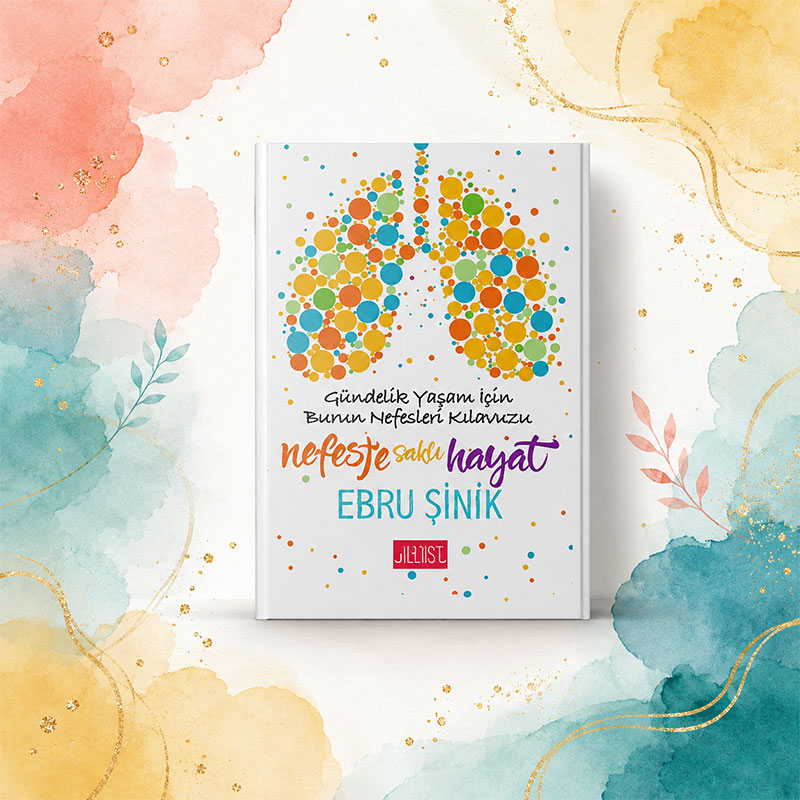
I wrote Nefeste Saklı Hayat primarily to fulfil my responsibility to share the knowledge I had acquired and to help people searching for information about breathing exercises gain easier access to reliable guidance.
One of my main objectives was stress management. The better we are able to manage stress, which lies behind many of the health challenges of modern life, the more balanced we may feel physically and emotionally.
Another objective was to encourage awareness. Creating space to hear the genuine needs of our bodies is one of the essential foundations of overall wellbeing and happiness.
I also wanted to offer a safe, clear and systematic resource in response to the widespread misinformation surrounding breath and breathing techniques.
A breathing guide for everyday life
Pozitif Magazine:
The subtitle of your book is “A Guide to Nasal Breathing for Everyday Life.” In which situations can this book guide us?
Ebru Sinik:
The book can guide us according to our changing moods and different needs throughout the day. Through controlled breathing practices, we can support the body and mind in becoming calmer, more balanced, clearer and more energised.
Most of the exercises are relatively easy to learn, and the effects of some practices may be noticed while they are being performed. However, it is important to remember that not every technique is suitable for everyone and that safety guidance must always be followed.
The book includes practices designed to support different needs, including:
- Breathing practices that support stress management
- Practices designed to calm the mind
- Relaxation exercises before sleep
- Techniques that support energy and vitality
- Practices that may assist concentration
- Exercises that support digestive wellbeing
- Physical and mental cleansing practices
- Breathing exercises that develop awareness
- Practices that support courage and self-confidence
- Techniques intended to balance body temperature
- Practices that support metabolic vitality
- Breathing exercises that engage the facial muscles
When should breathing practices be performed?
Pozitif Magazine:
Should we perform these breathing exercises throughout the entire day, or should we use them according to our mood and needs? Can their effects be felt immediately?
Ebru Sinik:
We do not practise these techniques continuously throughout the day. You may use them when you feel the need, according to your changing emotional state. However, my recommendation is to make the appropriate breathing practice part of your daily routine, just like brushing your teeth.
Depending on the recommended duration of the practice, it may be performed regularly for 5, 10 or 15 minutes each day.
The effects of certain practices intended to support relaxation, preparation for sleep, temperature balance or a greater sense of confidence may be noticed during the exercise itself.
Is an instructor required during the practice?
Pozitif Magazine:
Do we need the support or supervision of another person to perform these breathing practices?
Ebru Sinik:
Once the breathing techniques have been learned correctly and the contraindications, meaning the circumstances in which a practice may be unsuitable, have been carefully reviewed, many exercises can be practised independently.
However, I recommend that stronger and more active practices are initially taught one-to-one and that the practitioner is observed for a period of time. Some techniques may be more difficult for certain individuals to understand and apply correctly.
Observing the practitioner and providing feedback at the beginning can help establish a safer and more sustainable long-term routine. Once the technique has been learned properly, it may be practised independently whenever it is needed and the circumstances are suitable.
Why are contraindications important?
Pozitif Magazine:
At the beginning of each breathing exercise, you include a warning entitled “contraindications.” What exactly does this mean? Can we not practise any breathing technique we choose?
Ebru Sinik:
Not every breathing technique can or should be practised by everyone.
A contraindication is a medical term describing a condition or circumstance in which a particular practice should not be used.
Breathing techniques can be powerful practices. If you have experienced a significant medical condition, currently have a health concern, are pregnant or regularly take medication, you should carefully review the safety guidance for the relevant technique.
Each breathing practice should only be performed for the recommended duration. The belief that doing more will produce faster benefits is incorrect. Safety must always come first.
How can we choose the right breathing practice?
Pozitif Magazine:
How do we know which breathing technique is suitable for us?
Ebru Sinik:
In the book, I explain in detail when each breathing practice may be used and under which conditions it should be avoided. I also included a summary reference table so readers can quickly identify the relevant practice.
Can breathing exercises be practised during everyday life?
Pozitif Magazine:
Imagine that we feel frustrated at the office, become angry with a colleague or have an argument with someone we love. Can we perform a breathing exercise to calm ourselves without attracting too much attention?
Ebru Sinik:
Of course. The basic requirement is simply to sit with your spine upright. Keeping the hips and knees in a relaxed and balanced position can help you gain more from the practice.
You may sit on a chair or sofa, in a parked vehicle, on the metro or on an aeroplane. At home, you may also sit comfortably cross-legged on the floor while maintaining an upright posture.
Are happiness and success connected to breathing?
Pozitif Magazine:
We can use breathing to help us manage anger. Can we therefore say that happiness and success are hidden within the breath?
Ebru Sinik:
Happiness and success are closely connected to the extent to which we are able to manage stress.
As I wrote at the beginning of my book, feeling better and happier is not limited to our dreams for the future. It is also found in the choices and decisions we make for ourselves every day.
We support health, happiness and success through conscious choices. When we are stressed, mentally tired or unable to think clearly, our capacity to make conscious decisions may decrease.
Controlled and rhythmic nasal breathing can support the calming process through the autonomic nervous system and help us develop a healthier relationship with stress.
Breathing is one of the foundations of healthy living
Pozitif Magazine:
This appears to be more than a technique; it seems to be a step towards healthy living. What kinds of effects may we observe in the body?
Ebru Sinik:
Exactly.
Dr Andrew Weil, one of the leading names in mind-body medicine, has stated that if he had to limit his recommendations for healthy living to a single principle, it would be learning how to breathe correctly.
Breathing is one of the most fundamental tools we have for supporting both physical and mental balance.
Through the ancient breathing techniques described in Nefeste Saklı Hayat, we can practise in ways that support calmness, balance, clarity and vitality in both body and mind.
Because breathing is directly connected to the physiological arousal system, it may help us experience the effects of relaxation and awareness practices more quickly. Regulating the breath is one of the fundamental ways to soothe the nervous system and calm the mind.
The scientific foundations of nasal breathing
Pozitif Magazine:
You refer to numerous scientific sources in the book. How would you explain the scientific foundations of nasal breathing?
Ebru Sinik:
These techniques are not a belief system. No particular belief is required in order to practise them or observe their effects. The influence of breathing on human physiology and psychology has been the subject of scientific research for many years.
Many processes, from heart rate and hormone secretion to digestion and body temperature regulation, are managed by the autonomic nervous system. Breathing has a unique place among these automatic systems because it can also be regulated consciously.
When we change the frequency, depth and rhythm of the breath, the messages sent to the nervous system may also change. This can influence how we feel, how we think and how we respond to events.
The effects of yoga-based breathing and meditation practices on stress, sleep, blood pressure, psychological wellbeing and autonomic nervous system regulation continue to be studied in different areas of research. I also drew upon scientific studies and sources from this field while writing the book.
Why can habitual mouth breathing be problematic?
Pozitif Magazine:
In the book, you write that habitual mouth breathing may contribute to several health-related problems. Could you explain this in more detail?
Ebru Sinik:
Because of chronic stress in modern life, many people shift from diaphragmatic breathing to shallow chest breathing. Some also develop a habit of breathing through the mouth instead of the nose during the day or while sleeping.
The nose plays important roles in filtering, humidifying and preparing the air for the respiratory system. Habitual mouth breathing may be associated with concerns relating to sleep quality, oral health and breathing patterns.
Some of the complaints that may be observed in people who habitually breathe through the mouth include:
- Waking up feeling tired
- Dry mouth and bad breath
- Reduced sleep quality
- Headaches
- Difficulty concentrating
- Muscle tension
- Dental and gum-related problems
- A sense of restlessness
- Shallow and rapid breathing
- Throat irritation and coughing
- Postural problems
- Sleep concerns associated with snoring
Children who regularly sleep with their mouths open or habitually breathe through the mouth should be assessed by a paediatrician, ear, nose and throat specialist or dentist.
Can children practise breathing techniques?
Pozitif Magazine:
Can children also practise these breathing techniques?
Ebru Sinik:
Not every breathing technique is suitable for children. Stronger and more advanced practices should generally be postponed until physical development has progressed sufficiently.
Children over the age of seven may practise simplified forms of alternate nostril breathing for memory, concentration or exam-related stress under professional guidance and parental supervision.
Gentle and playful practices such as Lion’s Breath may also be used to support self-expression, courage and confidence. For other practices, professional guidance appropriate to the child’s age and health status should be obtained.
Video-supported breathing practices through QR codes
Pozitif Magazine:
Can readers who want more than written instructions also watch the breathing techniques being performed?
Ebru Sinik:
Of course. Readers can watch the relevant practice immediately while reading the book.
Nefeste Saklı Hayat is one of the pioneering breathing books supported by video demonstrations.
After explaining each breathing technique through illustrations, we included QR codes that provide access to videos in which I demonstrate the relevant exercise. Readers can scan the code with their phones and watch the practice immediately.
This makes it easier to integrate breathing techniques into everyday life and to revisit a particular practice at home, in the office or while travelling.
For those who prefer practical training
Pozitif Magazine:
Do you also offer an option for people who would prefer individual or practical training?
Ebru Sinik:
Those who would like to learn breathing practices in an educational setting can explore the breathing and Pranayama programmes offered by Yükselen Çağ. Learning the techniques with an instructor provides important advantages, particularly at the beginning, in terms of correct practice, selecting an appropriate technique and understanding the relevant safety principles.
Explore Breathing and Pranayama Programmes
Discover Ebru Sinik’s programmes in breathing, meditation and holistic living and find the training that best suits your needs.
Explore the Programmes